



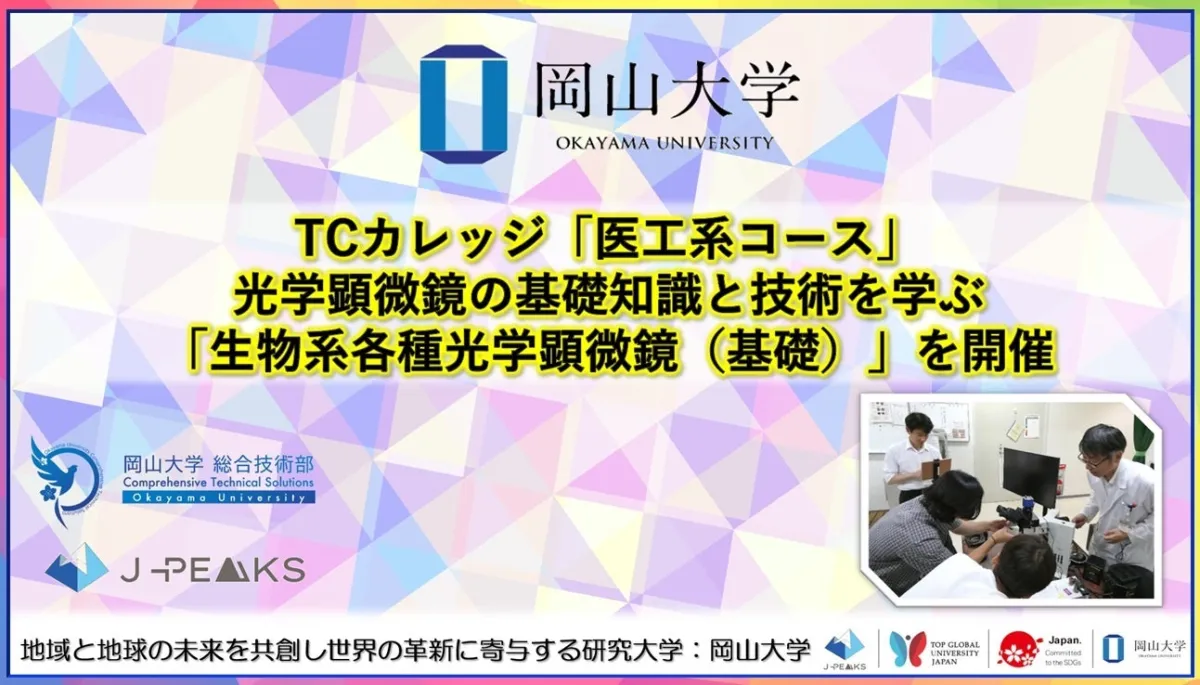
Understanding Optical Microscopy in Advanced Medical Engineering at Okayama University
Training in Optical Microscopy at Okayama University
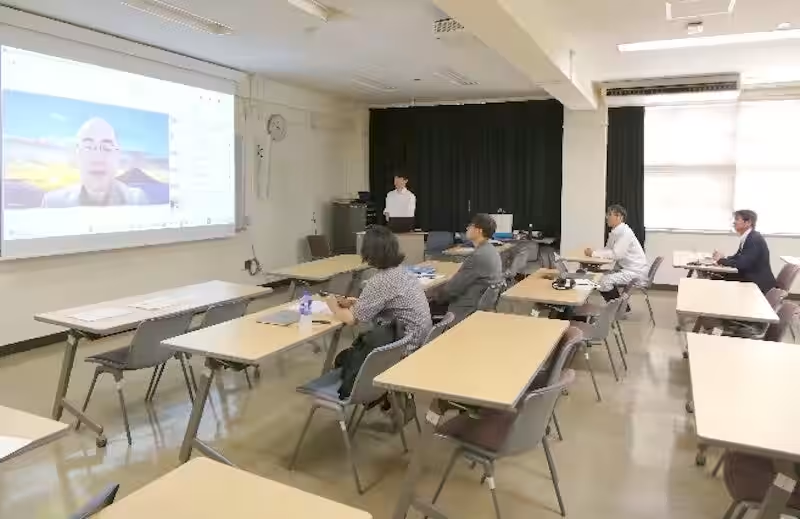
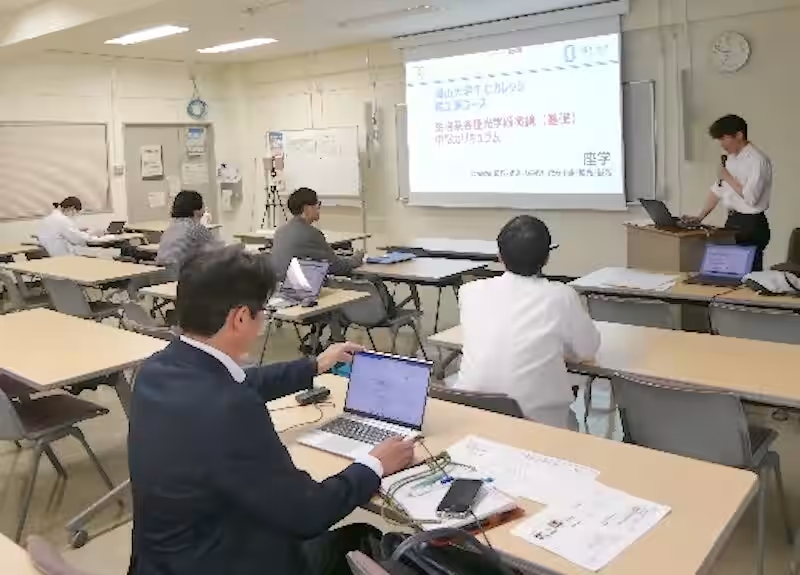
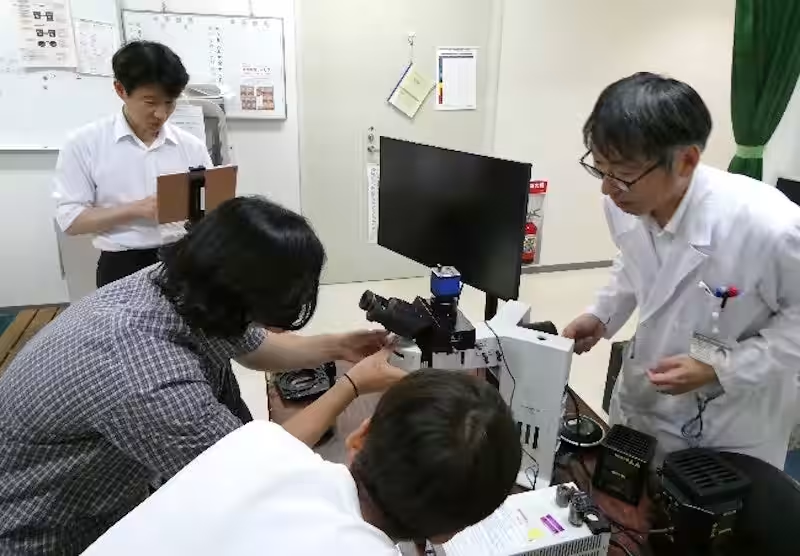
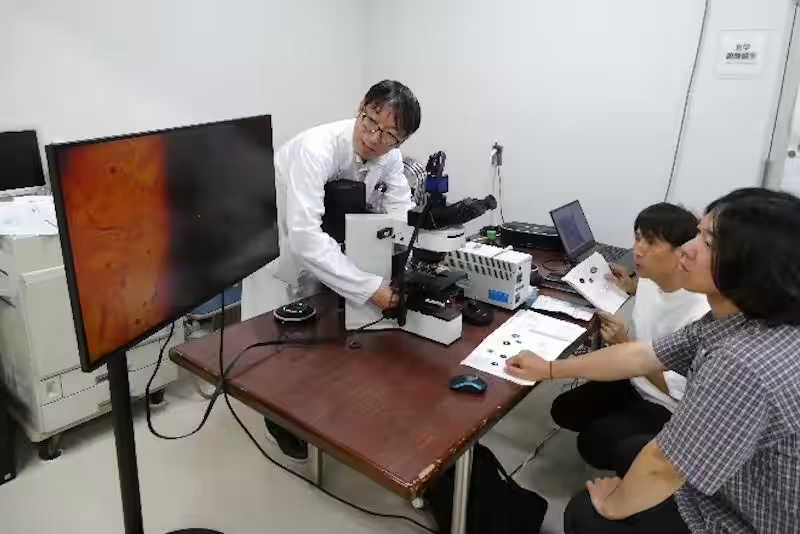
On June 29, 2026, Okayama University, recognized for its robust technical training programs, hosted a vital course on optical microscopy fundamentals, part of the TC College Medical Engineering program, designed to cultivate advanced technical personnel. This course, entitled "Basics of Various Biological Optical Microscopy," took place on the Okayama University's Shikada Campus, blending both theoretical lectures and practical training in a hybrid format that included both in-person and online participation.
During the face-to-face sessions, Kazuyuki Maruyama, a technical expert from the comprehensive technical department of Okayama University, and Junosuke Endo, a technician from Kyushu University’s Research Education Support Center, engaged in interactive discussions. The online segment featured three additional participants from the medical engineering course and three students from management and remote analysis DX courses, bringing the total number of attendees to eight.
Prominent figures leading the training included Masahiro Narasaki, head of the Medical Engineering Technical Division, and technical specialists Tetsushi Iwasa and Moemi Tsukano. Additionally, a representative from Okuma Corporation's marketing department, Shinichi Takeshita, contributed as a supporter, showcasing a collaborative approach between academia and industry.
The course began with opening remarks from Norihito Sato, the head of the technical department who is also the university's vice president for research and industry-academia collaboration. He emphasized the importance of continuous learning and adaptation in advanced technical roles. In the morning session, attendees learned about the foundational knowledge of optical microscopes, setting the stage for in-depth practical applications.
Following the lectures, the afternoon activities involved hands-on experience with microscope operations, enabling participants to adjust basic settings, explore observational methods, and perform maintenance tasks. This interactive format encouraged lively discussions around topics such as the use of filters during observations and the solutions used for lens cleaning, enhancing participants' understanding of the equipment.
Maruyama, who participated in the event, expressed his appreciation for the opportunity to reinforce his knowledge of microscope structure, observation principles, and maintenance from the ground up. He highlighted the value of understanding the importance of setting optical conditions tailored to specific observation objectives, as well as updating his knowledge on lens cleaning techniques. Looking forward, he aims to utilize the laboratory microscopes with a reinforced awareness of their principles and conditions, indicating the educational effectiveness of the program.
In his concluding remarks, Sato reiterated gratitude towards all collaborators for facilitating the course this year. He underscored Okayama University's ongoing commitment to elevating technical staff capabilities, which he believes is essential for strengthening the nation’s research infrastructure. The Medical Engineering course welcomed its largest cohort ever this year, with six new students enrolled.
As the course progresses, various diverse curricula will be introduced in alignment with student enrollment, enriching the training ecosystem. The comprehensive technical department aims to deepen collaborative efforts among technical professionals university-wide while facilitating skill enhancement through varied training programs.
Okayama University remains committed to fostering a culture of innovation and co-creation that contributes positively to both local and global communities and is recognized as a leading research university in Japan. Their endeavors in the TC College illustrate a robust framework for developing skilled practitioners who will drive advancements in the field of medical engineering. Keep an eye on the activities of Okayama University’s technical staff as they push the boundaries of education and expertise even further.
This information was published by Okayama University on July 19, 2026.

Topics Other)




【About Using Articles】
You can freely use the title and article content by linking to the page where the article is posted.
※ Images cannot be used.
【About Links】
Links are free to use.