



Introducing Qlean Dataset: A New Resource for Household Activity Recognition in Japan
Qlean Dataset: Revolutionizing Home Robotics with Realistic Video Data
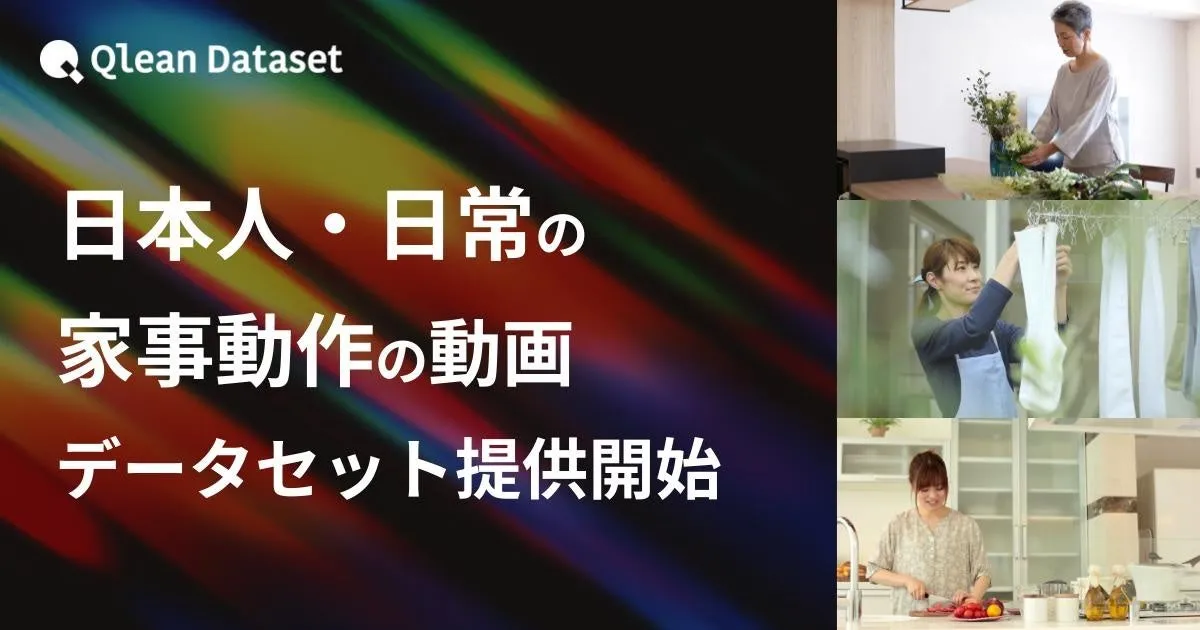
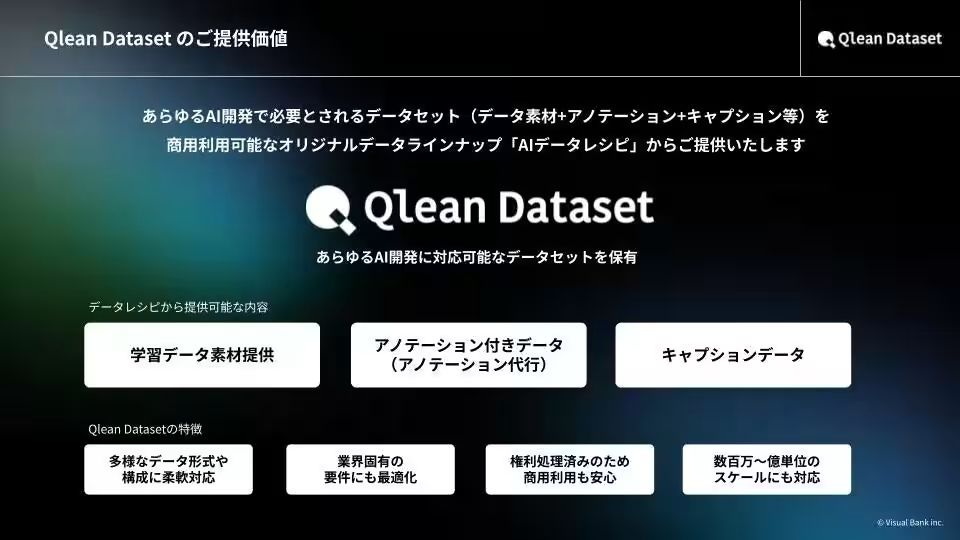
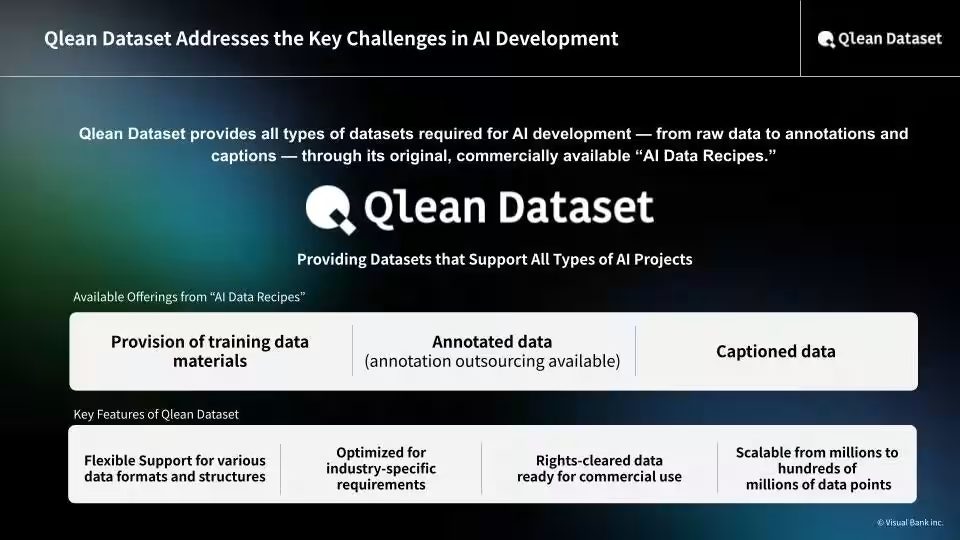
Visual Bank Inc., located in the Minato-ku district of Tokyo, is set to transform AI development in domestic robotics with its newly launched product, the Qlean Dataset. This innovative dataset provides high-quality video footage capturing daily household activities, specifically focusing on Japanese routines, thereby offering essential resources for companies aiming to enhance their AI models for home automation and action recognition.
What is the Qlean Dataset?
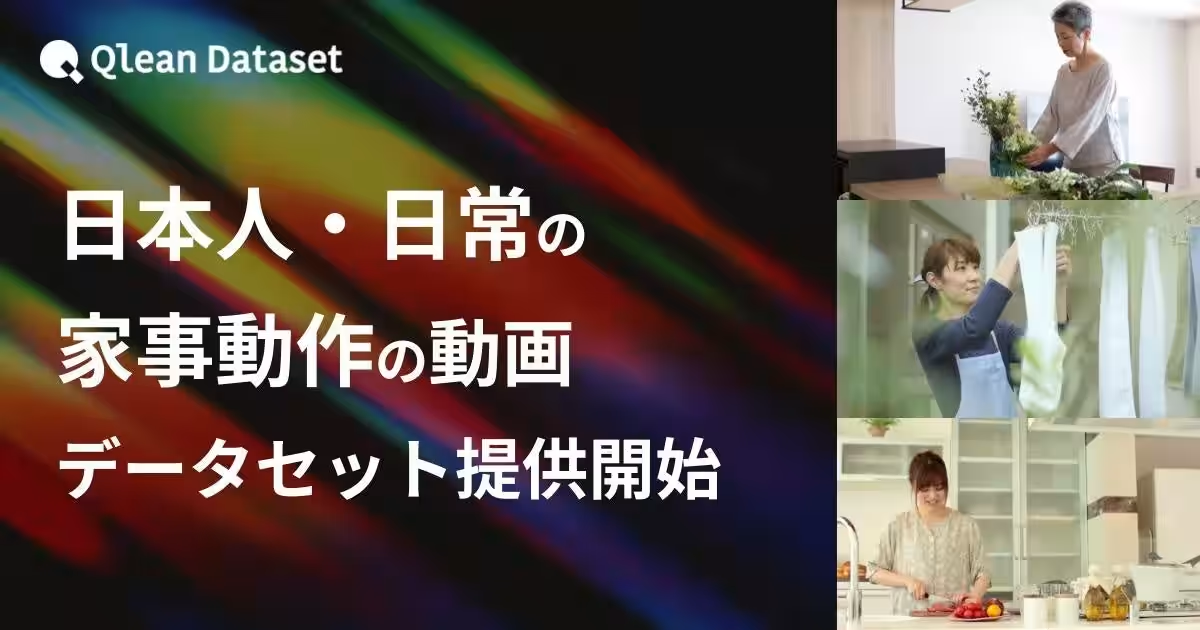
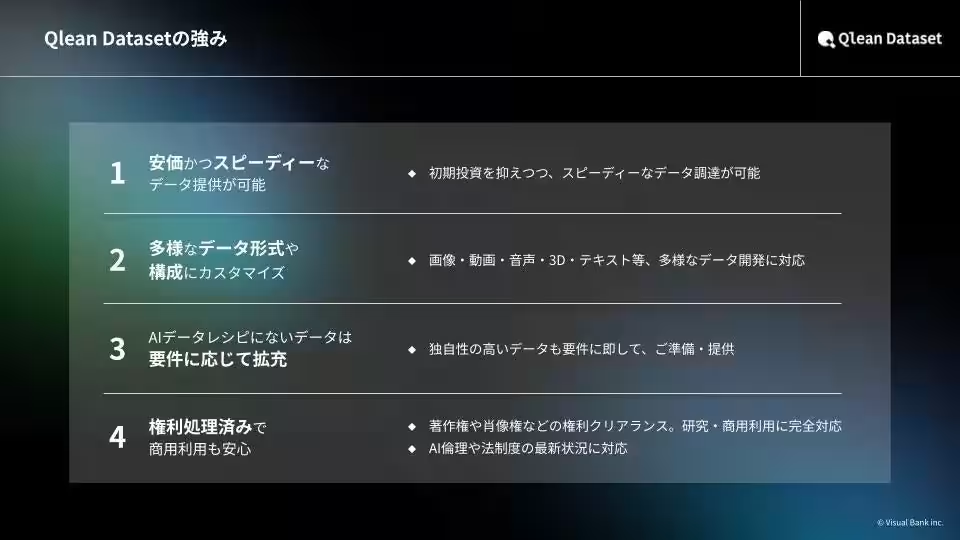
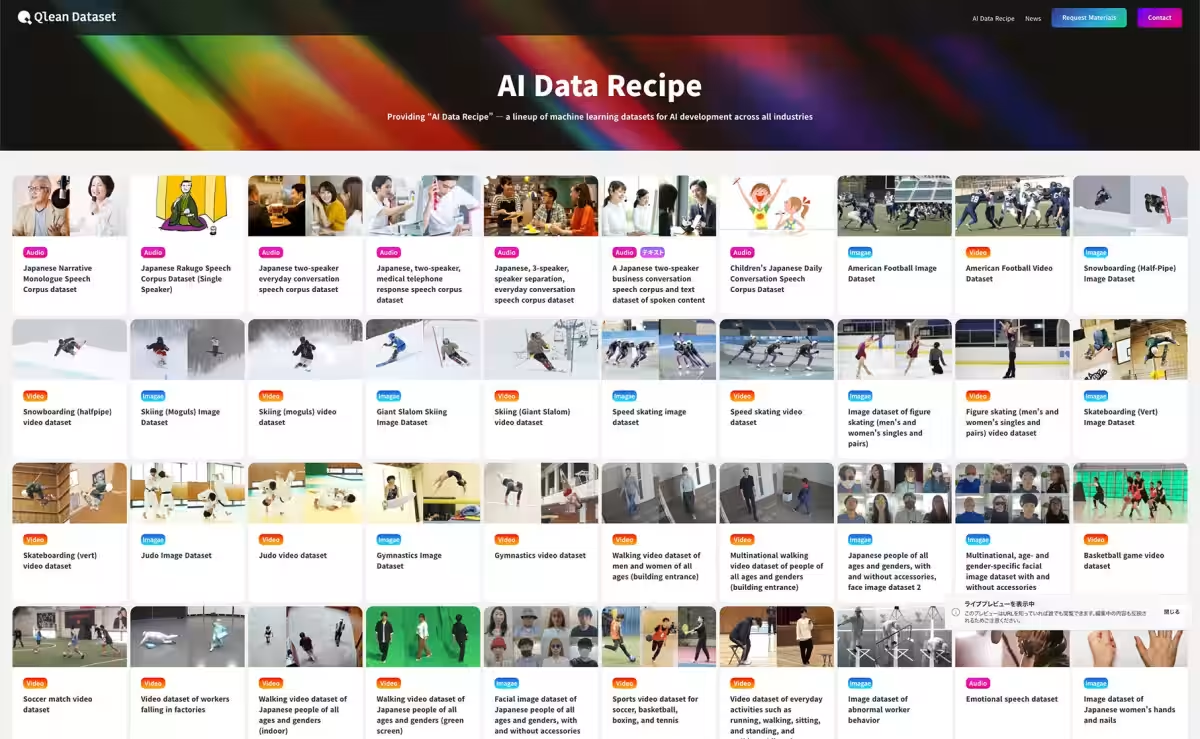
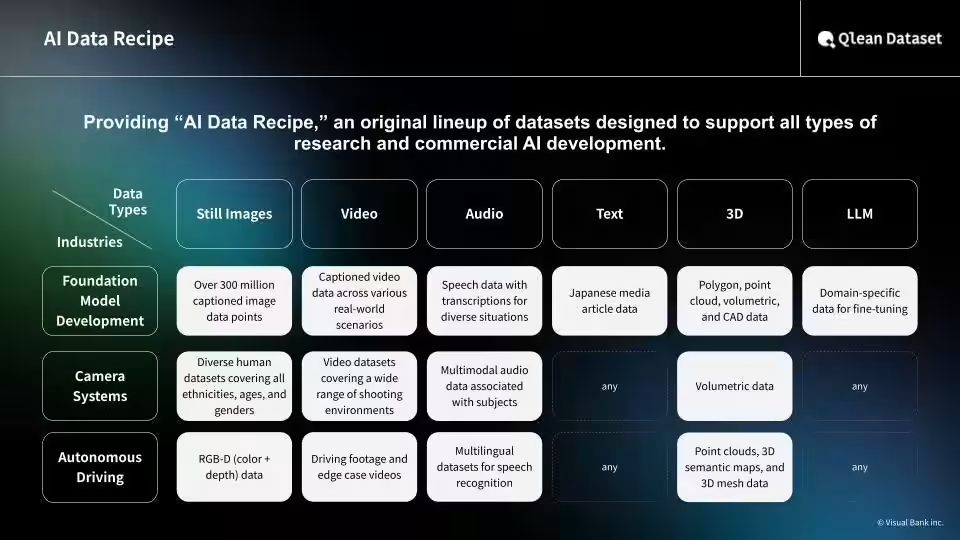
The Qlean Dataset is a sophisticated collection of video data designed for various applications in AI training. Developed by Amana Images, a subsidiary of Visual Bank, this dataset is tailored to meet the needs of researchers and businesses engaging in home robotics and advanced action recognition models. Unlike standard datasets, Qlean emphasizes the depth and realism of household activities, encompassing everything from cooking and cleaning to laundry tasks, all recorded in authentic residential environments.
The dataset features a wealth of metadata, providing detailed insights into each recorded activity, including the demographics of the individuals captured in the videos. This robust information allows developers to build algorithms that are not only effective but also adaptable to the complexities and variations present in real-world scenarios.
Detailed Attributes of the Dataset
The Qlean Dataset is structured as follows:
- - Data Type: Video footage in formats such as mp4 and mov.
- - Subject Attributes: Includes a variety of actions—cooking (like chopping and plating), cleaning, and handling laundry tasks. It encompasses a diverse age range, from young adults to seniors, while also showcasing different clothing styles (for instance, varying sleeve lengths and the presence of aprons).
- - Recording Environment: Filming took place in various domestic spaces, such as kitchens, living rooms, and laundry rooms, capturing the nuances of both natural and indoor lighting.
- - Angles: Multi-angle perspectives are provided, from full action shots to close-ups focusing on specific tasks, enhancing the dataset's usability for training AI systems that require fine detail recognition.
Filming Settings and Visual Analytics
Conducted in typical Japanese homes, the recording conditions were meticulously selected to reflect realistic environments. Natural lighting and indoor illumination strategies were employed to ensure that the dataset includes specific visual cues often found in everyday household settings. This attention to detail enhances the learning potential for AI models by embedding complex visual information which is difficult to synthesize in controlled environments.
Moreover, the Qlean Dataset enables comprehensive analysis of Video-Object Interaction (VOI), paving the way for advanced context-aware action prediction models. By providing both middle shots and close-up angles captured from various perspectives, the dataset serves as a practical resource for researchers and developers aiming to fine-tune their predictive capabilities in household robotics.
Use Cases for Qlean Dataset
Research Applications
One of the prominent research applications for this dataset lies in validating action prediction models. Researchers can test algorithms in environments that mimic real life, incorporating complex backgrounds and potential obstructions commonly found in households. This authenticity is crucial for building truly intelligent systems capable of predicting human actions based on realistic scenarios.
Industrial Applications
For commercial sectors, the dataset significantly aids in developing proactive task execution algorithms for autonomous home robots. By analyzing household movement patterns, developers can derive efficient path-planning strategies allowing robots to perform household chores seamlessly, without interfering with human activity. Additionally, the dataset's footage can help in designing manipulators that can flexibly perform tasks such as folding laundry or washing dishes.
Social Implementation
The Qlean Dataset also holds substantial potential in social systems, especially for monitoring the elderly and those requiring care. It offers benchmark data that can help in accurately identifying normal daily events, thereby enhancing anomaly detection systems aimed at emergencies like falls or health fluctuations.
Conclusion
The Qlean Dataset represents a game-changer in the domain of AI for home robotics. By offering a rich pool of data that captures daily life in its various forms, Visual Bank and Amana Images stand at the forefront of AI development aimed at streamlining household activities. As the demand for intelligent home solutions grows, so too does the necessity for comprehensive, real-world data—something the Qlean Dataset provides in abundance.
For more information and access to the Qlean Dataset, visit Qlean Dataset and explore the future of AI in our homes.









Topics Consumer Products & Retail)
【About Using Articles】
You can freely use the title and article content by linking to the page where the article is posted.
※ Images cannot be used.
【About Links】
Links are free to use.