



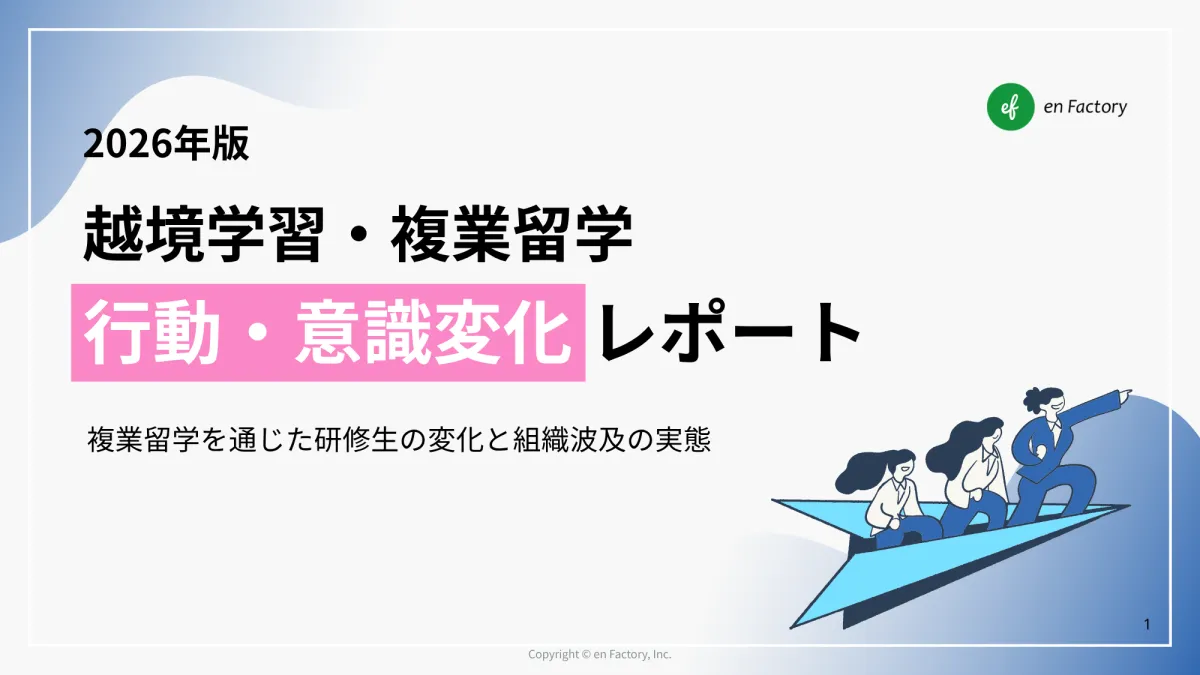
Enfactory Reports Significant Growth in Cross-Border Training Program with Enhanced Learning Outcomes
Enfactory's Cross-Border Training Program: A Transformational Journey
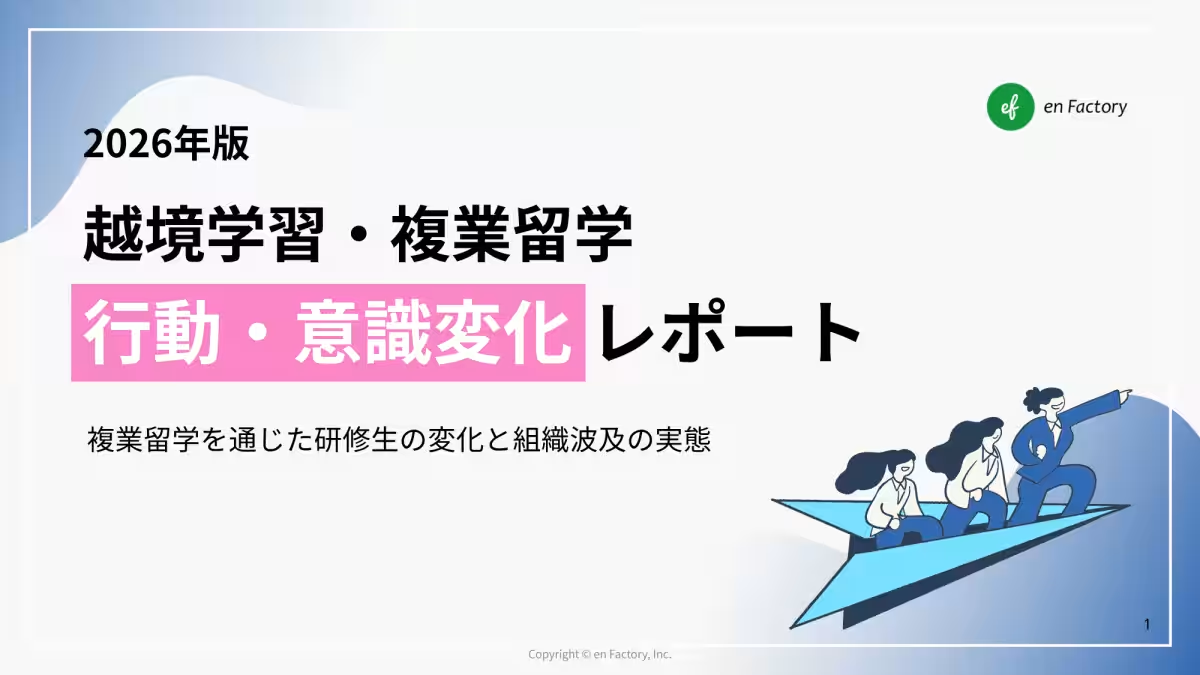
In just six years, Enfactory, a Tokyo-based organization, has successfully trained over 400 participants across 140 companies through its innovative cross-border training program, termed 'Fukugyo Ryugaku'. This training initiative aims not only to enhance individual skillsets but also to facilitate significant organizational development. Recently, Enfactory released the 'Behavior and Awareness Change Report 2026', highlighting the measurable impact of their program on both individual participants and their respective organizations.
This report is based on surveys conducted between April 2024 and April 2026, gathering insights from 137 participants. The findings illustrate the transformative power of the Fukugyo Ryugaku program, showcasing participants' growth and the benefits felt within the organizations they represent.
Key Achievements
Enfactory has expanded its offerings significantly, achieving a remarkable milestone of 140 participating companies and 400 cross-border professionals. Major firms, especially those in manufacturing and finance, have embraced this program, driving further adoption amongst employees eager to grow. The report details several noteworthy outcomes from the training:
1. Behavioral Shifts: There was a drastic increase in individuals questioning their own company norms and adopting external best practices. The number of participants affirming this behavior rose from 24.1% to 46% after completing the program.
2. Career Clarity: Participants reported a substantial improvement in their understanding of their desired career paths, jumping from 25.5% to 65.7% in clarity about their career aspirations post-training.
3. Organizational Impact: Personal growth has been shown to influence organization-wide dynamics, particularly through increased leadership behaviors. Those actively engaging in giving feedback rose from 28.5% to 41.6%.
4. Self-Perceived Growth: A notable increase, from 65.0% to 78.8%, reflects participants' confidence in noticing their own development, evidencing both subjective experiences and objective feedback.
5. Real-World Application: Tracking surveys post-program have shown that the majority of participants believe their learning is actively applied in daily work settings with 22.5% stating it's
Topics People & Culture)
【About Using Articles】
You can freely use the title and article content by linking to the page where the article is posted.
※ Images cannot be used.
【About Links】
Links are free to use.