




Revamping Business English Text for Enhanced Online Learning Experience
Complete Overhaul of Business English Text at Sankei Online English
Sankei Human Learning Co., Ltd., headquartered in Shinjuku, Tokyo, has announced a total renovation of the 'Business English' text in its online conversation service, 'Sankei Online English Plus.' This update focuses on critical skills necessary for real-world business situations, particularly 'communication in meetings' and 'negotiation skills.' The curriculum now includes essential expressions for online meetings and phrases suitable for exhibitions, making it more relevant to today's professional landscape.
Key Highlights of the Update
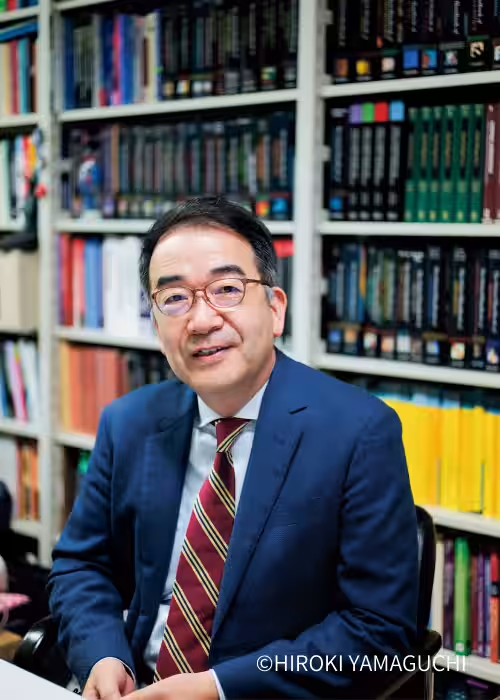
- - Expert Revision: The revision is supervised by Professor Yukio Tono from Tokyo University of Foreign Studies, a leading figure in the dissemination of the CEFR (Common European Framework of Reference for Languages) in Japan. Learning items have been structured based on international standards to ensure appropriateness for various proficiency levels.
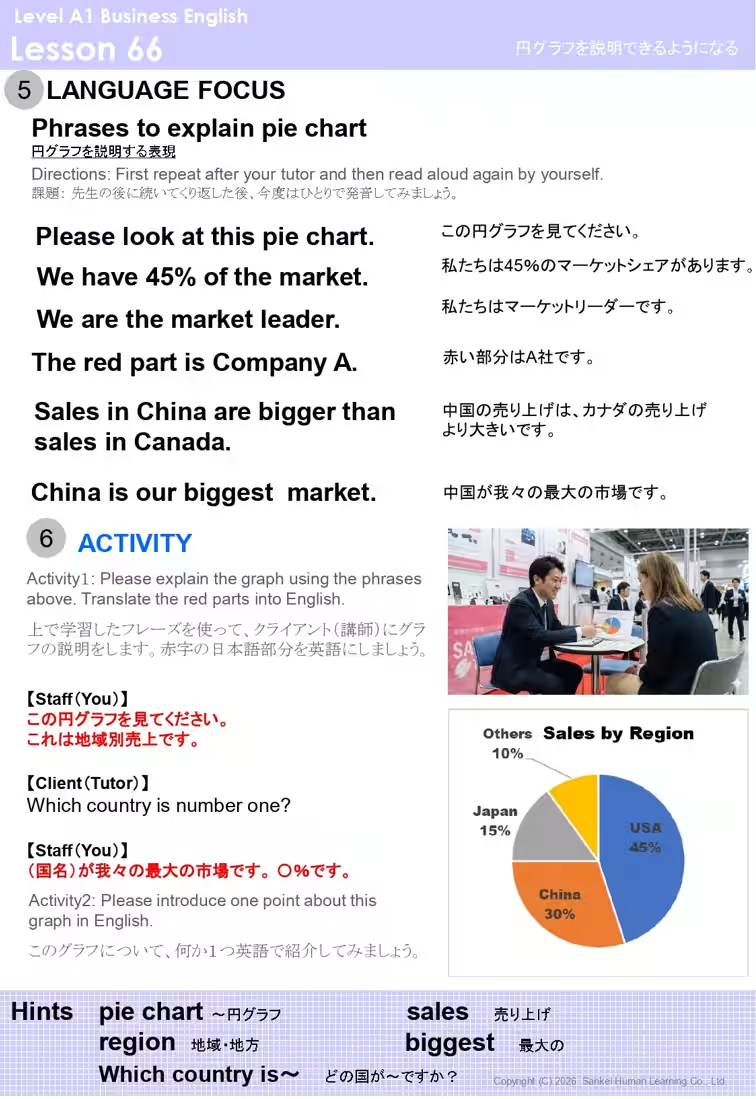
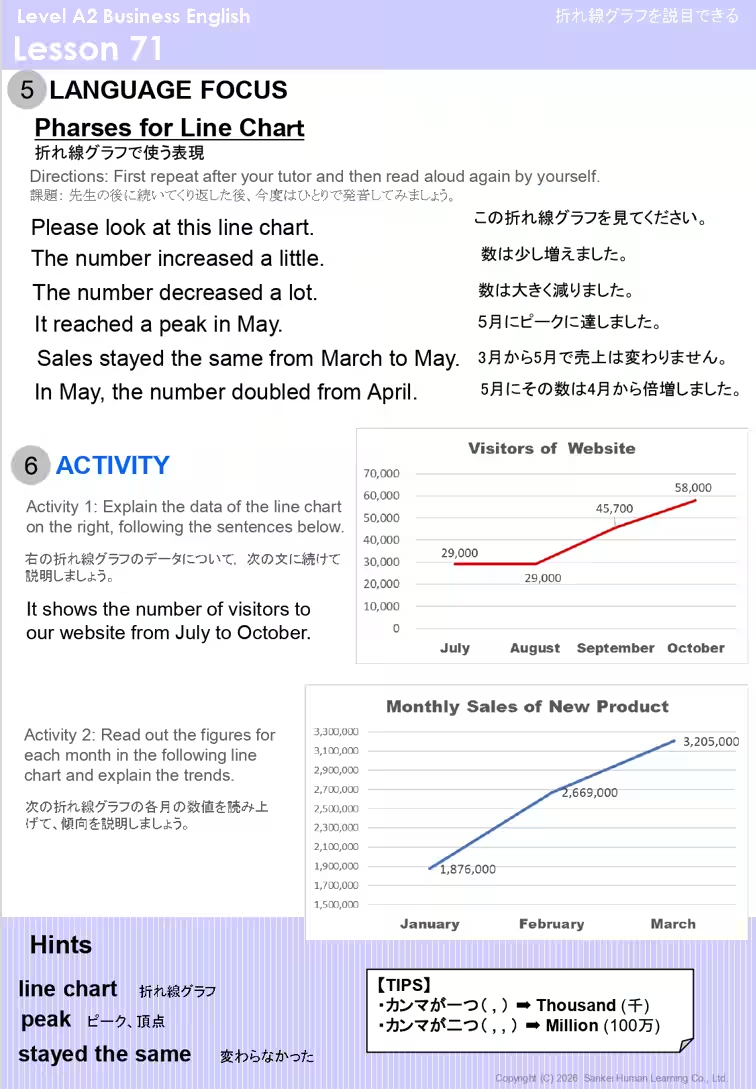
- - Strengthened Focus on Meeting English: The course extensively revises the teaching of 'English for meetings,' covering essential skills from managing discussions to understanding and articulating numerical data, a common hurdle for intermediate learners. New phrases for use at domestic and international exhibitions have also been introduced, equipping learners for last-minute preparations.
- - Introduction of Negotiation Scenes: The B2 level now includes scenarios focused on negotiation. This allows learners to develop skills through realistic situations, enhancing their ability to lead discussions effectively.
Background to the Update
As global business ecosystems evolve, the demand for proficiency in English that drives results beyond basic conversational skills continues to grow. A survey conducted by Japan's Ministry of Education revealed that only 13.6% of Japanese individuals have a TOEIC® score of B2 or higher, which is essential for leading global meetings. Even those who reach this benchmark often feel their conversational abilities do not meet the B2 criteria.
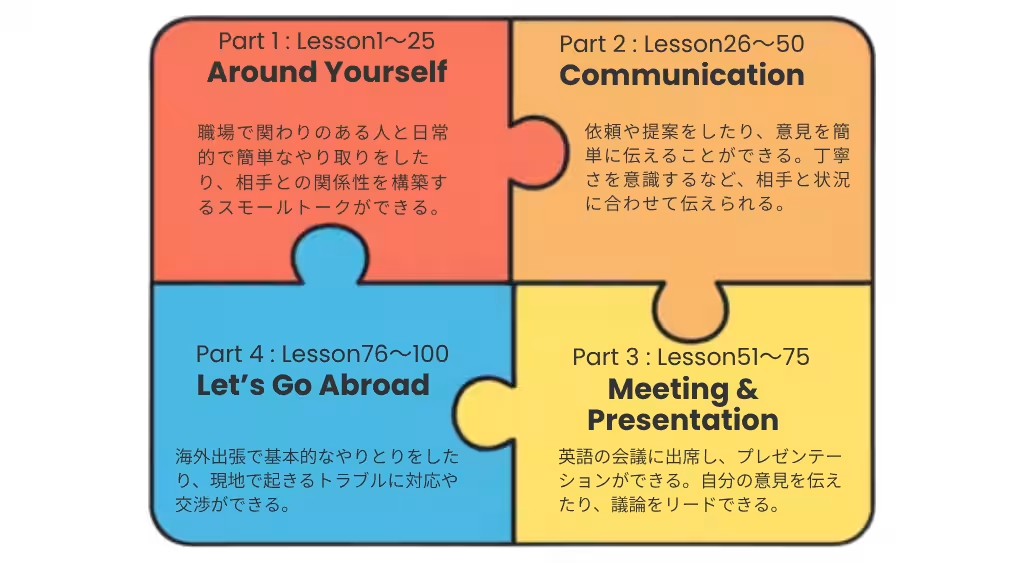
In this comprehensive update, lessons 51-75 of the A1/A2/B1 courses have been revamped to focus specifically on 'English for Meetings.' This includes teachings tailored to handle the different formats of numbers in Japanese and English, explanations of charts and graphs, and specific expressions for online meetings—directly linking the content to practical use in the workplace. Additionally, a curriculum that boosts 'negotiation' skills at the B2 level was created to encourage relationship-building and consensus-making.
Professor Yukio Tono, a prominent advocate for the CEFR's adaptation in Japanese English education, has lent his expertise to ensure that the curriculum remains practical and impactful for learners.
Benefits of the Business English Course
The Business English course is categorized into 100 lessons across four levels (A1–B1), allowing learners to not only follow the progression from the first lesson but also select sessions tailored to their needs. The recently updated content focuses on enhancing the skills needed for meetings, ensuring competency in discussing numbers and explaining graphs or tables, which is vitally important for modern business settings.
Three Main Points of the Revamp
1. Complete CAN-DO List Overhaul: The overhaul of the CAN-DO list has been executed under the guidance of Professor Tono. This revision is aimed at updating appropriate teaching materials for learners, with a focus on essential grammar and skills necessary for each level of study.
2. Enhanced Lessons on Meetings and Presentations: Navigating the complexities of 'English for meetings' is a significant hurdle for many in business English. This course thoroughly covers how to initiate discussions, smoothly lead meetings, and effectively present one's segment. A significant focus is on the treatment of 'numbers,' especially pertinent for those engaging in business where decision-making hinges on numerical data.
3. Updated Discussion Themes for B2 Course: At the B2 level, the focus is now on developing negotiation skills judged through realistic scenarios encountered in real work environments. Whether interacting with clients or coordinating with colleagues, learners will engage with practical exercises designed to enhance their capacity for effective English negotiations.
About Sankei Human Learning
Sankei Human Learning is a collaborative project of three entities: Sankei Digital, known for its trusted media presence, Human Academy, which supports learning and employment, and Trans Cosmos, identified as 'Your Global Partner.' The program prioritizes high-quality and safe English conversation courses, with lessons provided by Filipino teachers, native instructors, and Japanese teachers tailored for learners ranging from beginners to advanced levels. To date, over 500 corporations and more than 200 educational institutions have benefited from their programs.
About Human Group
Since its founding in 1985, the Human Group has been dedicated to the principle of 'serving society and individuals.' The organization's educational foundation supports various sectors, including human resources, caregiving, childcare, IT, beauty, and sports, leveraging a robust network of over 340 locations across Japan and 5 corporations in four countries abroad to combat the pressing issue of declining labor population.
Additionally, the group is committed to improving work environments through reskilling, effective use of international human resources, caregiving to bolster local workforce, and advancements in productivity through AI and digital transformation initiatives.
Company Overview
- - Company Name: Sankei Human Learning Co., Ltd.
- - CEO: Yuki Nakaya
- - Location: 7-5-25 Nishi-Shinjuku, Shinjuku-ku, Tokyo
- - Capital: 50 million yen
- - Website: Sankei Human Learning

Topics Other)

【About Using Articles】
You can freely use the title and article content by linking to the page where the article is posted.
※ Images cannot be used.
【About Links】
Links are free to use.