



AI CROSS Achieves Over 90% Adoption Rate of Deep Predictor's Optimization Features
AI CROSS Reports a Milestone with Deep Predictor
AI CROSS, a leading Japanese technology firm based in Minato, Tokyo, has recently celebrated a significant achievement regarding its demand forecasting and operational management service called Deep Predictor. The company announced that over 90% of the businesses that adopted the operational optimization option of Deep Predictor have successfully integrated its functions into their processes.
A Closer Look at Deep Predictor
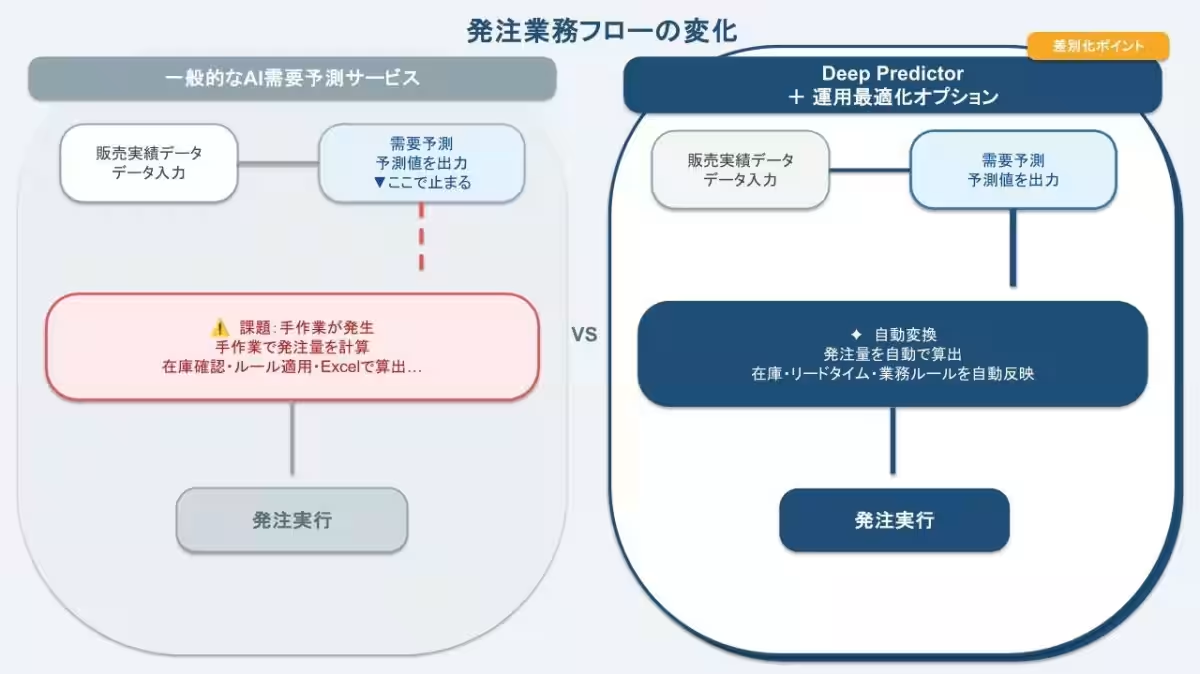
Deep Predictor is designed to transform forecasting outcomes into actionable insights tailored to meet the unique needs of various business operations such as order placements, shipment planning, and sales strategies. By automating the conversion of AI-generated forecasts into usable formats, the service enables field staff to utilize these insights directly for decision-making without the common complexities that often slow down AI implementation.
This operational optimization option addresses a major hurdle many companies face when implementing AI demand forecasting—ensuring that the solutions become ingrained within organizational processes. While AI can deliver precise forecasts, the challenge lies in translating these results into practical decisions that align with a company's specific rules, protocols, and constraints. If this translation process isn't properly structured or automated, it can lead to reliance on individuals' expertise, undermining the potential efficiency the AI promises.
Challenges in AI Implementation
Many businesses find that attempting to custom-develop a solution to these challenges can be prohibitively expensive and time-consuming. This realization has led AI CROSS to proactively incorporate operational optimization features into the Deep Predictor from its inception, directly addressing the common issues faced by potential users.
Key Features of the Operational Optimization Option
- - Tailored Forecast Delivery: Predictions are configured to match specific business scenarios, enhancing their value in real-time operational decision-making.
- - Automation Beyond Prediction: The option automates not just forecasting but also subsequent operational judgments, boosting overall efficiency and adherence to AI practices across teams.
- - Integration of In-House Logic: The service allows the incorporation of internal decision-making logic and constraints, generating outputs that facilitate immediate judgments while reducing dependency on individual performance.
- - User-Friendly Design: The functional design empowers staff to operate more autonomously, effectively aiding in overcoming the broader industry challenge of AI operational integration.
Real-World Impact: Case of IKO International, Inc.
One notable success story comes from IKO International, Inc., a subsidiary of the Japan Tomson Group based in the U.S. responsible for bearing and precision instrument sales across five locations. Traditionally, inventory ordering tasks were managed manually by four staff members using Excel, which was identified as a significant bottleneck.
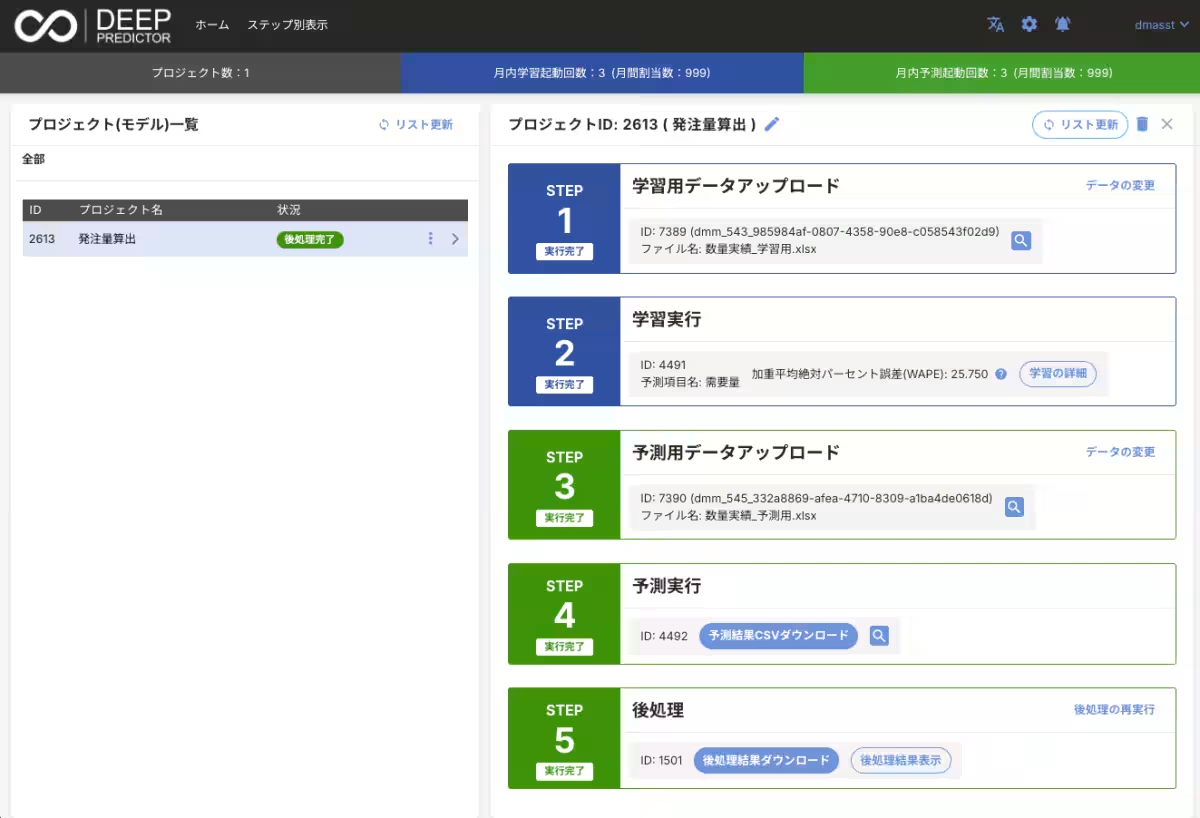
Upon evaluating various AI demand forecasting tools, IKO chose Deep Predictor due to its comprehensive service capability that integrates demand forecasting, recommended order calculations, and follow-up processing into a single solution—exactly what the operational optimization option encompasses.
Quantitative Results
- - Time Reduction: The weekly workload for inventory ordering was drastically reduced from 3.8 hours to just 1.4 hours—an impressive 63% decrease.
- - Annual Time Savings: This translates to roughly 124.8 hours saved annually.
Qualitative Benefits
- - Reduced Variation: Staff inconsistencies in order quantities and duplicate orders across locations were resolved, leading to a more uniform operational approach.
- - Easier Knowledge Transfer: Transitioning responsibilities became smoother, promoting standardization and routine processes.
For further details, check out the related press release.
AI CROSS's Vision for Practical AI
AI CROSS envisions


Topics Business Technology)

【About Using Articles】
You can freely use the title and article content by linking to the page where the article is posted.
※ Images cannot be used.
【About Links】
Links are free to use.