




Navigating the Challenges of Creating Effective Business Plans
Overcoming the Challenges of Business Plan Creation
Creating an effective business plan is crucial for entrepreneurs, but many face significant hurdles. A recent survey conducted by the lending consulting firm, Yuushi Daiko Pro, has shed light on the common issues that arise when drafting business plans, particularly focusing on sales forecasting.
Sales Forecasting: The Main Challenge
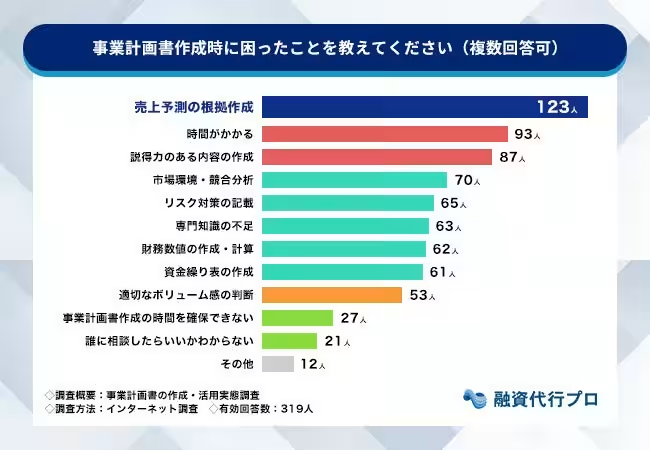
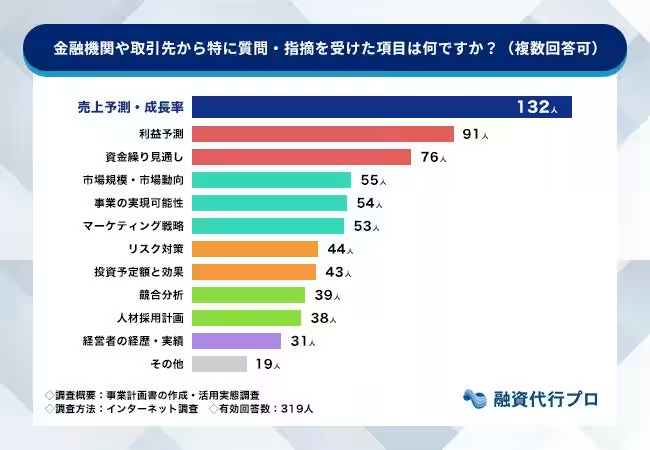
According to the survey, 38.6% of participants identified the creation of solid sales forecasts as the most challenging aspect of preparing a business plan. This aligns closely with feedback from financial institutions, where 41.4% of respondents indicated that sales forecasts and growth rates are the most scrutinized elements. These results emphasize the critical nature of establishing reliable data to justify revenue projections, as it heavily influences the overall persuasiveness of the business plan.
Time Constraints and the Need for Expertise
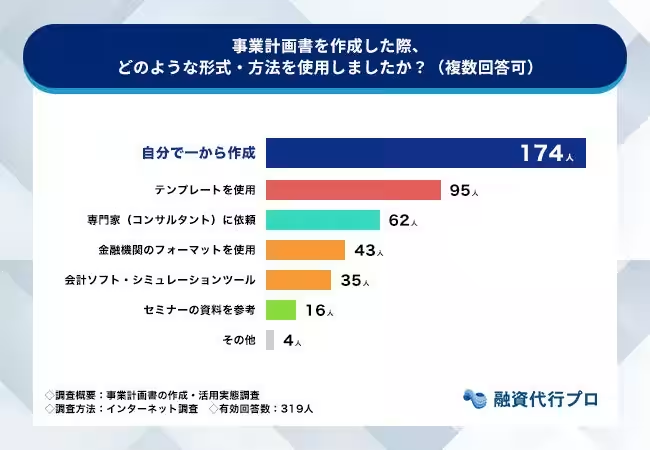
Creating a compelling business plan is not just about numbers; it's about answering the question: "Why are these numbers valid?" However, 29.2% of business leaders reported that the process consumes an excessive amount of time, highlighting the burden of balancing business operations with planning. Interestingly, while over half (54.5%) of the surveyed executives create their plans from scratch, only 19.4% enlist the help of consultants or experts.
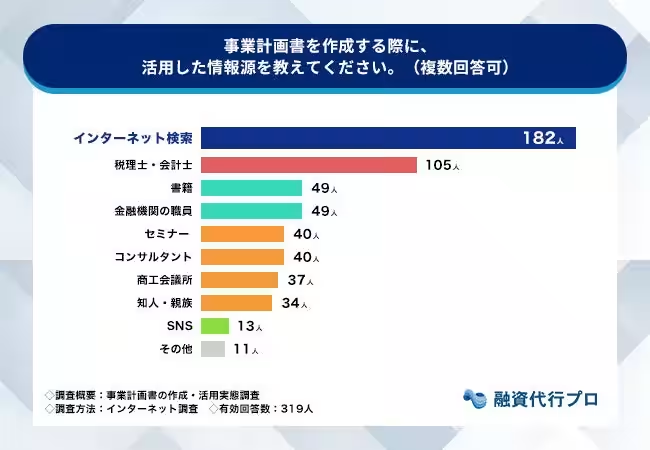
This data suggests that many entrepreneurs may be tackling these complex challenges without sufficient support. Relying on general information from the internet or resources like accountants might not suffice when producing a plan that can meet the rigorous demands of lenders.
The Focus of Financial Institutions
The survey also revealed that when questioned by banks or partners, the top concerns were tied to financial metrics, particularly sales forecasts. This stark alignment between the challenges faced by business owners and the priorities of financial institutions hints at a systemic issue where entrepreneurs struggle with the same aspects that lenders find most critical.
The results indicate that while business owners aim to set ambitious goals, they often lack the ability to substantiate those claims with credible numerical foundations. This deficiency signifies a pressing need for appropriate tools and guidance in business plan preparation.
Advice from Experienced Entrepreneurs
Feedback from seasoned entrepreneurs points towards the importance of developing realistic sales projections based on solid evidence and seeking peer reviews. Many voiced the necessity of third-party evaluations to catch any weak points in their plans before approaching financial institutions.
For instance, one participant remarked, "I approached the bank for funding, but they indicated my numbers were unfounded given my lack of proven track record." This underscores the essence of validating revenue numbers with data-backed assumptions.
Another entrepreneur highlighted how time constraints during business hours can hinder the ability to create a comprehensive plan, leading to diminished sales as they struggle to balance operational duties with planning responsibilities.
To navigate these challenges, advice was provided to seek guidance from experienced professionals early on. One respondent noted that having a consultant from the beginning could streamline the process and avoid the pitfalls that many entrepreneurs encounter.
Conclusion: The Importance of Structured Support
In conclusion, the ongoing difficulties surrounding business plan creation, especially regarding sales forecasting, indicate a crucial area for development and support. The survey's findings resonate with the need for entrepreneurs to focus not only on setting business goals but also on articulating the reasoning behind their projections convincingly. By integrating insights from experienced individuals and considering professional assistance, business leaders can better prepare their plans to withstand the scrutiny of financial institutions. As articulated by Kotaro Okajima, the CEO of Yuushi Daiko Pro, understanding how to allocate time and resources effectively during the planning phase is essential for success in obtaining funding.


Topics Business Technology)
【About Using Articles】
You can freely use the title and article content by linking to the page where the article is posted.
※ Images cannot be used.
【About Links】
Links are free to use.