



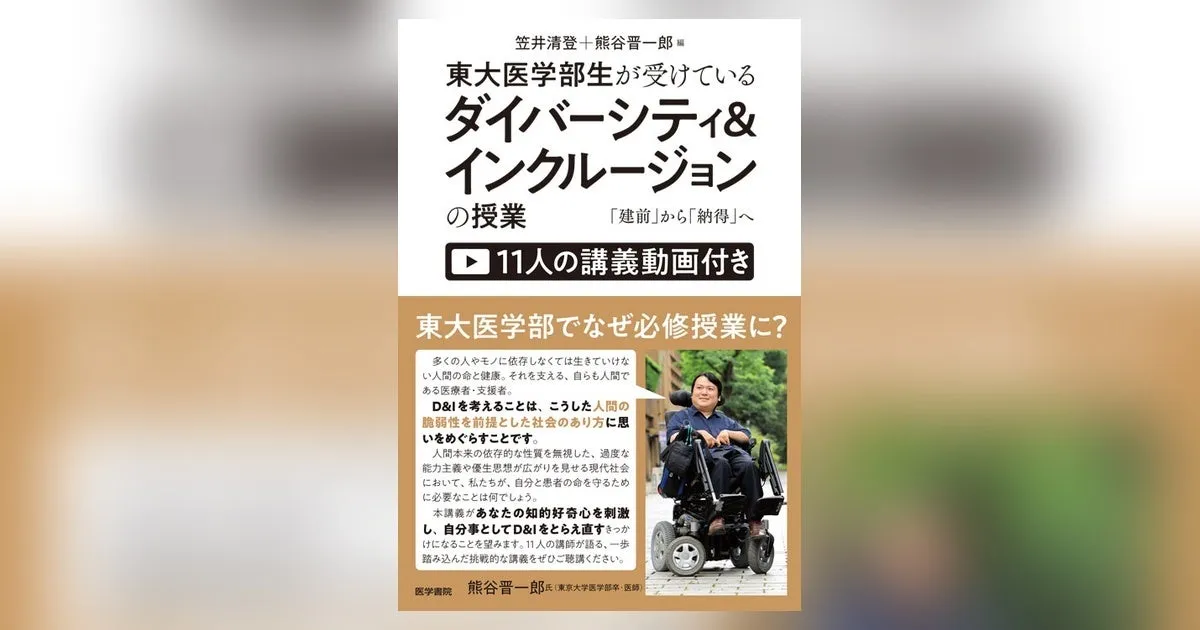
Exploring the Power of Diversity and Inclusion in Medical Education
Exploring the Power of Diversity and Inclusion in Medical Education
Diversity and Inclusion (D&I) are no longer just buzzwords; they’re essential elements of modern medical education. Amidst evolving cultural norms and an increasingly interconnected world, fostering understanding and empathy among future healthcare professionals has never been more critical.
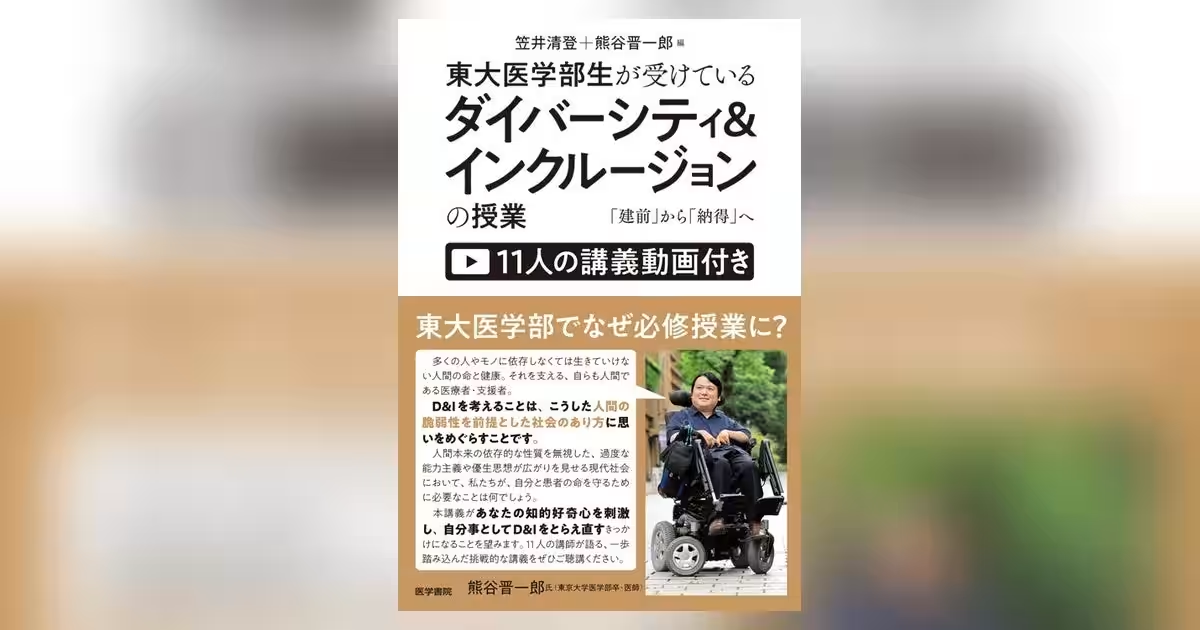
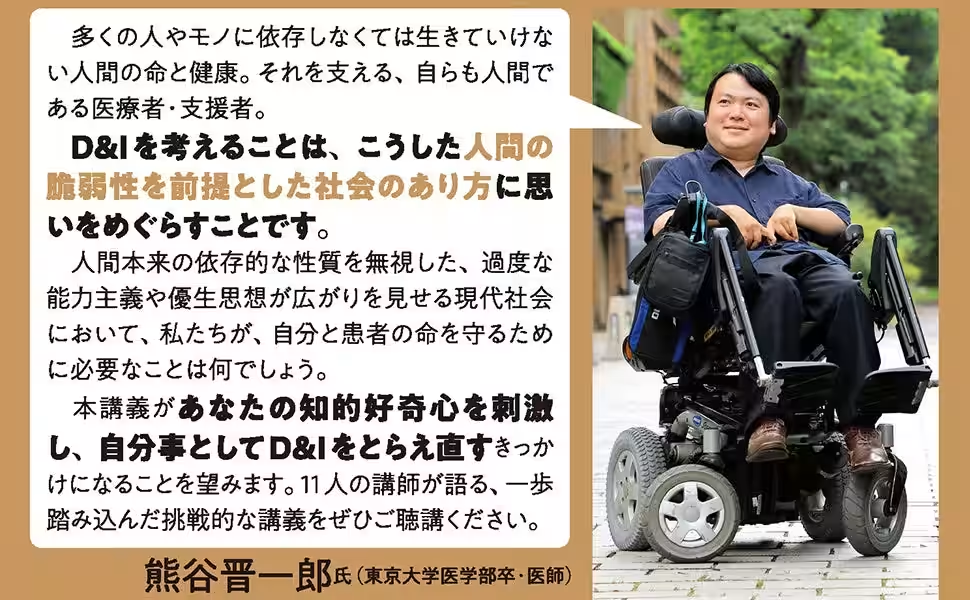
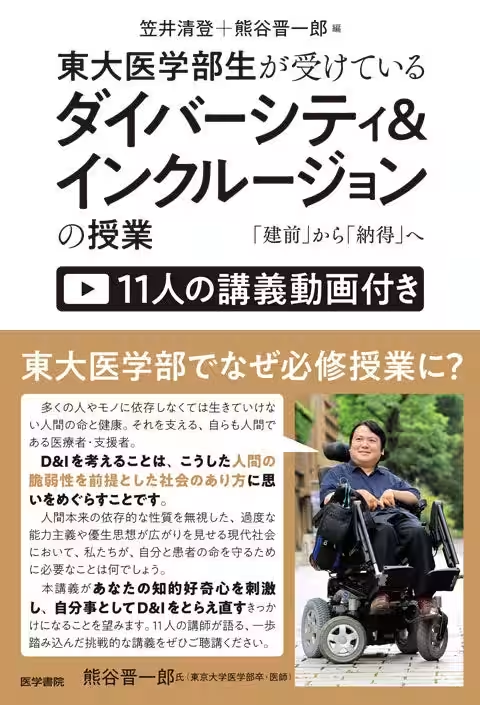
In this light, a new book titled "Diversity and Inclusion Classes Taken by Tokyo Medical University Students: From 'Facade' to 'Understanding'" is set to hit the shelves on July 13, 2026. Edited by Kiyoto Kasai and Shinichiro Kumagai, this transformative work features a series of insightful lectures from experienced professionals, researchers, and advocates who have participated in the Tokyo University’s D&I initiatives.
The Tokyo University School of Medicine's commitment to D&I education began with the establishment of the Diversity Education and Research Center in April 2021. The center provides mandatory coursework focused on D&I for all medical students, emphasizing the necessity of interacting with diverse individuals and stakeholders in healthcare settings. The curriculum aims to inspire future medical practitioners to engage in co-creation and shared innovation, shifting from traditional approaches of merely “providing” medical care to collaborative practices that acknowledge the voices and experiences of those they serve.
Kiyoto Kasai, a professor at the University and the center's director, remarks in the introduction of the book that exposing medical students to the narratives of diverse populations and encouraging them to actively participate in creating inclusive healthcare solutions will ultimately reshape the culture of medicine itself. The lectures within the book tackle pressing issues of stigmatization, trauma-informed care, and the challenges faced by marginalized communities in healthcare settings.
The book is structured into four main sections, each bringing a unique perspective on D&I in the medical field:
1. Understanding the Need for D&I in Healthcare: This section features video lectures that dissect why healthcare professionals must be knowledgeable about D&I, focusing on subjects such as the impact of stigma on mental health and strategies to combat eugenic ideologies.
2. Foundational Elements of D&I Implementation: Expert speakers delve into why co-production is vital. Learning from examples involving mental health stigma, they explain how collaborative methods can enhance understanding between care providers and patients. This part also includes practical applications of peer support in care settings, addressing DEI through school mental health models and trauma-informed frameworks.
3. Examining D&I Through Personal Narratives: Personal stories are powerful tools for understanding. This section of the book dives into the narratives of autistic individuals and their perspectives on gender, recovery tales from addiction support groups, and discussions on societal exclusion.
4. Showcasing Existing D&I Practices: The final section brings real-world D&I applications to the forefront by sharing innovative approaches and case studies that demonstrate the effective inclusion of diverse voices in healthcare research and outreach programs.
Additionally, those interested can view the video lectures via QR codes provided within the book, making this a valuable resource for educators and students in nursing, psychology, social work, and other support professions. It serves as a guiding framework for introducing D&I concepts into classroom discussions and practical exercises.
Overall, "Diversity and Inclusion Classes Taken by Tokyo Medical University Students" is more than a textbook; it's a call to action for the next generation of healthcare professionals. By learning why D&I matters and seeing the practical strategies in action, these future leaders will be better equipped to foster an inclusive environment for all, fundamentally altering the landscape of healthcare for years to come.
With its release in July 2026, this book is poised to become a crucial component of medical education and training, emphasizing the need for change and the power of inclusion in shaping compassionate healthcare professionals.
Topics Health)
【About Using Articles】
You can freely use the title and article content by linking to the page where the article is posted.
※ Images cannot be used.
【About Links】
Links are free to use.