



Understanding Japan's Longevity Secrets: The Role of Nutrition in Healthy Aging
The Secret to Longevity in Japan: Nutritional Insights
On July 24, 2026, Japan's Ministry of Health, Labour and Welfare released its annual report on the average life expectancy of Japanese citizens, revealing that in 2025, men enjoyed an average lifespan of 81.35 years while women reached 87.33 years. Compared to the previous year, men have seen a 0.25-year increase, and women 0.20 years, cements Japan's status as one of the longest-living countries worldwide. Notably, Japanese women hold the top position globally in life expectancy, whereas men rank seventh.
However, life expectancy isn't the sole concern; the concept of 'healthy life expectancy' is gaining prominence. This is defined as the duration during which individuals can live without restrictions due to health issues. As of 2022, healthy life expectancy was reported as 72.57 years for men and 75.45 years for women. In an era dubbed the '100-year lifespan,' the focus is shifting from merely living longer to maintaining good physical and mental health throughout one's life.
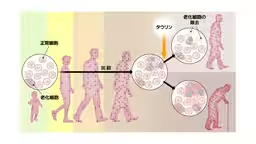
While aging is a natural process, the rate at which it occurs is significantly influenced by daily habits, including diet, exercise, and sleep. Researchers speculate that a traditional Japanese diet, which emphasizes fish and soy products, may be a prime factor behind the nation’s longevity.
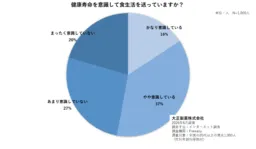
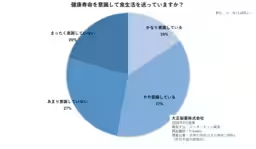
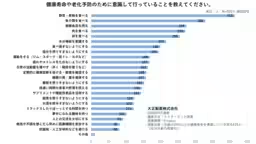
In June 2026, Taisho Pharmaceutical Co., Ltd. conducted a survey with 1,000 participants aged 20 and over in Japan, aimed at evaluating awareness of healthy life expectancy and dietary habits. The survey revealed that about 53% of respondents were conscious of their diet in relation to healthy aging. Among them, only 16% reported being


Topics Health)

【About Using Articles】
You can freely use the title and article content by linking to the page where the article is posted.
※ Images cannot be used.
【About Links】
Links are free to use.