




Exploring the Evolving Role of AI in New Employee Development in 2026
The Role of Generative AI in New Employee Training in 2026
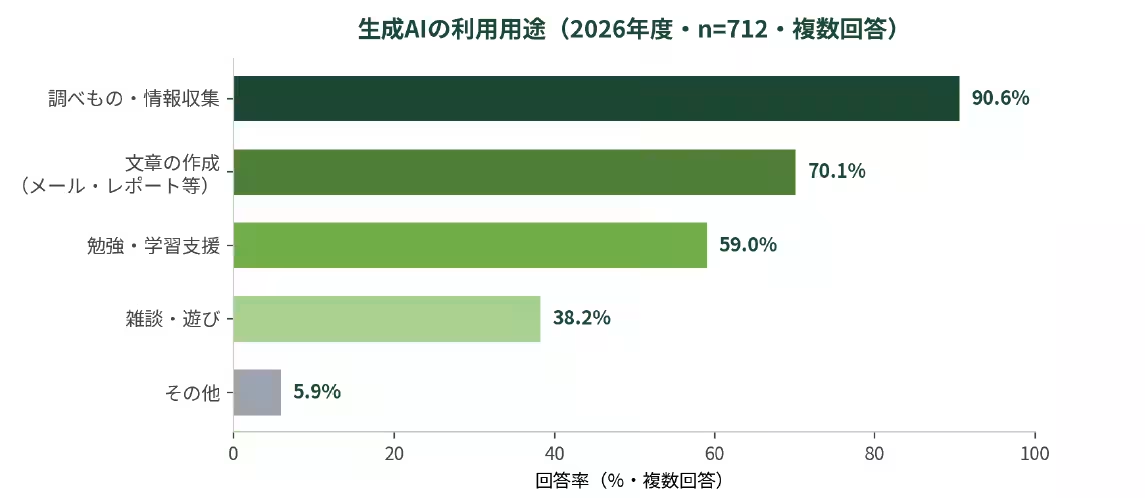
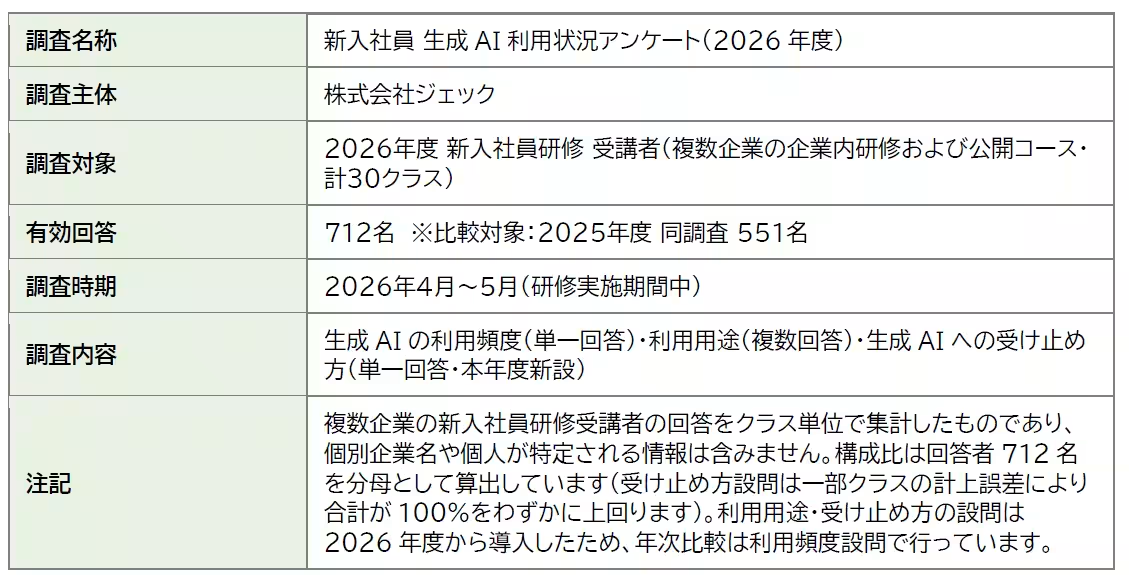
In a recent survey of 712 new employees who began their training in 2026, it was revealed that a staggering 99% have experience using generative AI. This figure marks a significant shift in workplace dynamics, indicating that new hires no longer view AI as something they will eventually adopt but rather as an integral part of their daily work and learning environments.
The Emergence of AI-Driven Workforces
As organizations continue to integrate advanced technologies, the focus has transitioned from merely assessing whether employees can use AI to evaluating how effectively they can leverage it in their tasks. The capacity to utilize AI efficiently signifies a deeper level of proficiency than just knowing how to operate it. The core issue now lies in developing an understanding of how to think critically and creatively with AI as a partner.
Perception of AI among New Employees
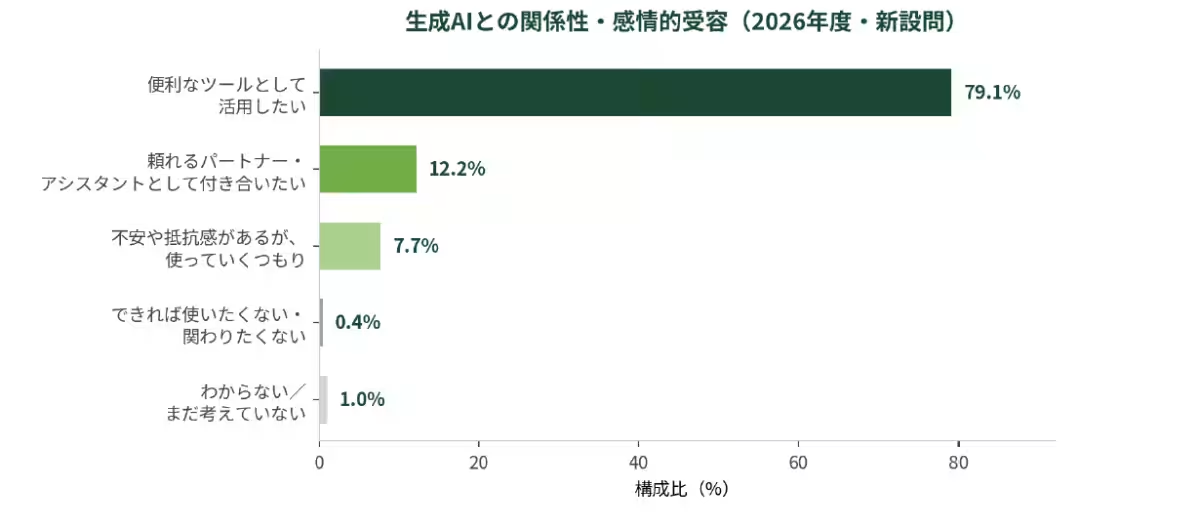
A notable aspect of the survey findings is how new employees perceive generative AI. Around 79.1% view AI primarily as a convenient tool, while only 12.2% see it as a reliable partner in their work. A small fraction—7.7%—expresses apprehension about using AI, though they plan to adapt, whereas only 0.4% prefer to avoid it altogether. This indicates a cultural shift where AI has become normalized as a reliable component in their work processes.
What stands out is the thought processes behind utilizing AI tools. For instance, an employee may generate text using AI and utilize it directly without scrutiny, reflecting a passive approach. Alternatively, one might request AI to draft content, engage in revisions, and validate the output against their own insights, exemplifying a collaborative effort.
Different Approaches to AI Utilization
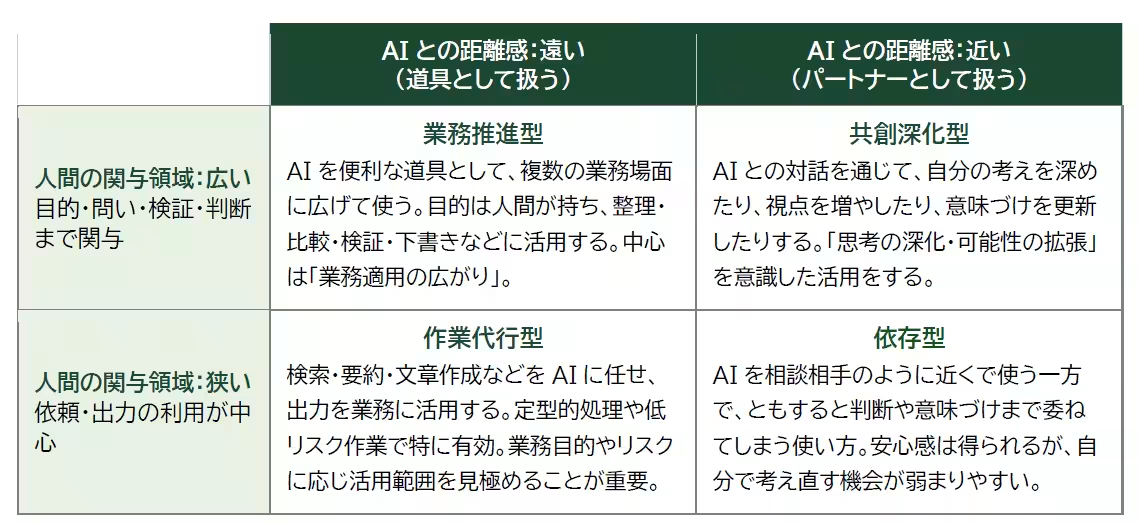
The distinction between simply using AI as a tool and treating it as a collaborator heavily influences the outcomes achieved. Understanding how far to rely on AI in generating responses without delegating all critical thought processes becomes essential. This brings us to the four characterizations of AI utilization:
1. Tool Usage: Leveraging AI for efficiency but maintaining control over goals and outcomes.
2. Co-Creation: Engaging actively with AI to enhance quality through collaborative thinking and dialogue.
It's paramount that organizations guide their employees in harnessing the full spectrum of capabilities AI offers rather than limiting their usage to basic tasks.
Training the Next Generation: Key Capabilities
In light of the overwhelming acceptance of generative AI, training should shift from teaching merely how to use AI towards fostering deeper critical thinking and outcome-driven capabilities. The four key skills to cultivate among new employees include:
1. Goal Definition: Employees need to determine the objectives of their AI use, establishing the context for its application.
2. Question Formulation: The quality of AI outputs hinges on the clarity and specificity of the queries posed to it. Effective question formulation leads to more relevant and actionable insights.
3. Output Interpretation and Judgment: Employees must develop the competence to assess the reliability of AI-generated outputs critically, ensuring they are applicable to their specific corporate contexts.
4. Result Shaping: Transforming AI outputs into tangible, actionable plans requires human intervention, focusing on purpose and clarity.
Bridging the Generational Gap
Another enlightening aspect of the survey highlights the emerging generational gap, wherein new employees are far more proficient with AI tools than their superiors in the workplace. With 99.3% of new hires comfortable using generative AI and 86.7% using it at least once a week, the disparity becomes apparent. Traditional notions of knowledge transfer, where senior staff educate juniors, may no longer hold true in this rapidly evolving landscape.
Rethinking Workplace Training and Management
To fully harness the potential of AI within organizations, there needs to be a structural redesign of training and management practices, focusing on ongoing education that incorporates AI usage as integral to employee development. The emphasis should shift toward developing tailored training programs that address the specific needs and expectations of each role, enabling employees at all levels to engage effectively with AI.
As we continue navigating the evolving landscape of work influenced by AI, the challenge before us will be crafting a training framework that accommodates and enhances this transition, ensuring that the next generation is well-prepared to thrive in this new context.

Topics Other)

【About Using Articles】
You can freely use the title and article content by linking to the page where the article is posted.
※ Images cannot be used.
【About Links】
Links are free to use.