



Huawei Unveils Grid-Forming Strategy for Future Power Systems at The Smarter E 2026
Huawei Unveils Grid-Forming Strategy for Future Power Systems at The Smarter E 2026
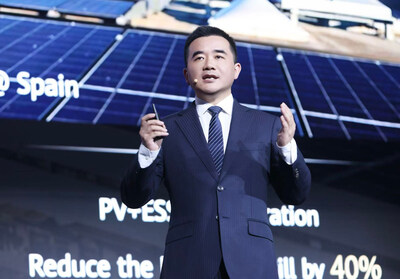
At the esteemed conference The Smarter E 2026 in Monaco, Steven Zhou, President of the Smart PV & ESS Product Line at Huawei Digital Power, delivered a compelling speech about the company's strategic interest in integrated grid-forming solutions. This initiative aims to bolster the resilience of electrical networks to support the anticipated rise of renewable energy usage in Europe.
According to forecasts, the penetration of wind and solar energy in Europe is projected to reach an impressive 64% by 2030. However, the current electrical system faces significant challenges, including diminished network resilience and weakened robustness stemming from increased dispatch complexity and a reduced number of traditional synchronous generators.
In response to these challenges, European markets are ramping up investments in electrical networks, enhancing the deployment of grid-forming BESS (Battery Energy Storage Systems), and developing new grid codes with specific grid-forming requirements. This transition signifies a broader shift in the electricity market from simple energy arbitrage to diverse network ancillary services. During his address at The Smarter E 2026, Zhou emphasized that these initiatives signal a clear message: future photovoltaic and BESS products must evolve to become primary energy sources.
The energy landscape is undergoing a transformation, evolving from a focus on single-element innovation to integrated technology solutions. Hybrid PV-BESS solutions, with their inherent grid-forming capabilities, are facilitating the replacement of traditional thermal power plants. Key grid-forming functionalities, such as black start, inertia support, and short-circuit current support, have been fully validated across varying operational conditions and timescales, progressively refining the technical capabilities of the system.
Zhou elaborated on Huawei's strategic roadmap, which has adapted to reflect the evolution of electric networks. He highlighted the introduction of LUNA in 2020, the industry’s first smart string energy storage system designed to ensure that clean energy does not go to waste during nighttime. The name LUNA, derived from 'moon,' symbolized its purpose. In contrast, the solar inverter, called SUN, signifies energy generation during daylight hours. Zhou announced a significant branding evolution for the energy storage system, which has undergone a name change from LUNA to LUTERRA, derived from 'Earth.' This reflects a shift from merely illuminating the night to protecting our planet.
With the new "Smart PV" strategy, Huawei aims to leverage its core 4T technologies—Bit, Watt, Heat, and Battery—to continuously innovate and expedite the realization of a modern electrical system tailored for every user segment and scenario. Zhou further detailed remarkable progress in CI projects across Europe, utilizing Huawei's versatile one-fits-all solution that encompasses photovoltaic systems, BESS, electric vehicle charging stations, and AI-based planning. For instance, in Germany, the AHS corporate park experienced a 10% revenue increase within just two years after adopting Huawei's all-encompassing solution. Meanwhile, in Spain, a Carrefour supermarket witnessed a nearly 40% reduction in its electricity bill, with a payback period of only five years.
As Huawei prepares for the future of the electrical market, Zhou noted that BESS business models will diversify further. The hardware's flexibility and software's evolution enable Huawei’s platform to adapt to varying business models and optimize the benefits. With demonstrations worldwide, from Spain to Mongolia, Germany to the Philippines, showcasing the value of Huawei's grid-forming technology, Zhou is confident that the company’s core competencies will enhance their Smart PV and BESS solutions, maximizing value for customers while reinforcing grid stability amid rising renewable energy penetration.
Topics Energy)
【About Using Articles】
You can freely use the title and article content by linking to the page where the article is posted.
※ Images cannot be used.
【About Links】
Links are free to use.