



Transitioning Beauty Salons from Quantity to Quality: A New Era Begins
The New Era of Solo Salons in the Beauty Industry
In recent years, the beauty industry has been witnessing a transformative shift from a focus on quantity to a concentration on value. This change emphasizes the importance of providing high-quality services in a single-stylist salon setting, also known as a solo salon. The rise of this trend can largely be attributed to economic changes, including the bankruptcy of large salons, a labor shortage, and evolving consumer preferences towards value-oriented services.
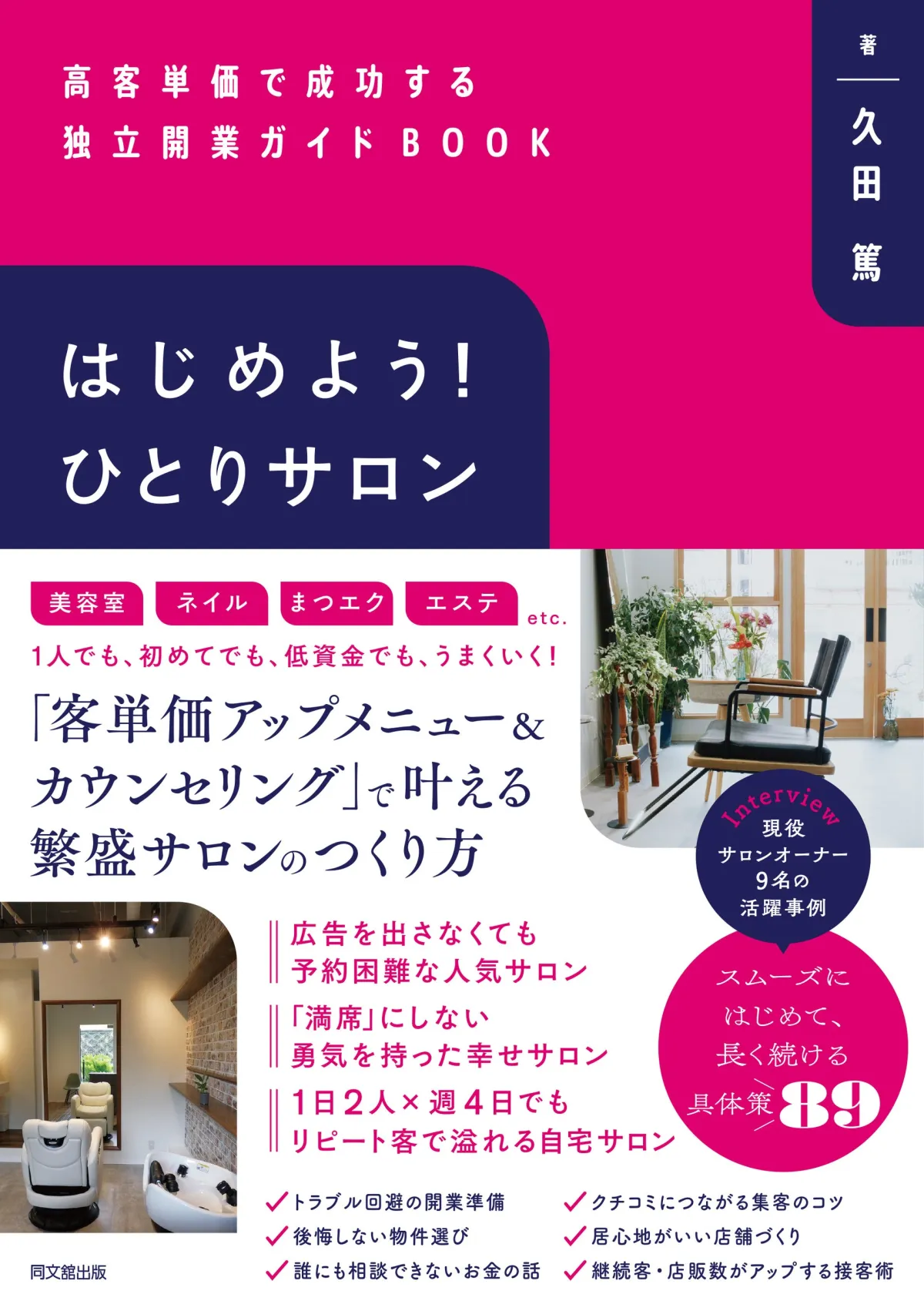
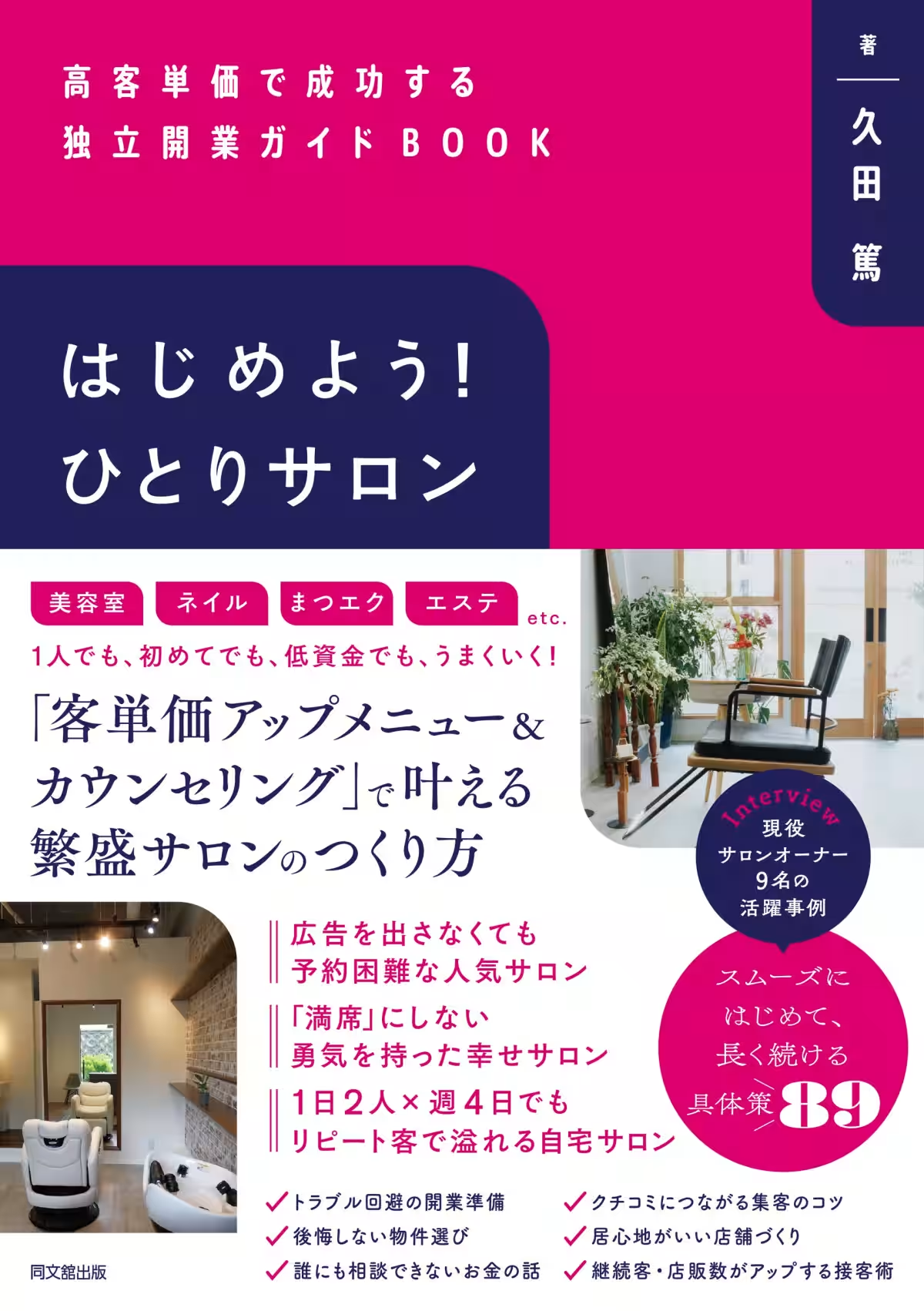
To address these challenges and offer practical solutions, renowned author Atsushi Kuda, who has multiple awards in the hair growth and scalp care sectors, published a new book titled "Let's Start: Solo Salons" through Dōbunkan Publishing.
Overview of the Book
This book aims to support salon owners—particularly hairstylists and estheticians—who may feel afraid or overwhelmed by the prospect of wanting to operate independently or struggling to increase their revenue. Within its pages, Kuda provides a structured approach to achieving stable, high profits as a solo operator.
Instead of focusing on metrics like the number of clients served or service rotation rates, the book advocates a transformation towards creating increased value. The book presents three primary strategies:
1. Increase Average Revenue per Client
2. Enhance Client Retention Rates
3. Reduce Advertising Costs
By shifting focus towards value-driven operations, salon owners can cultivate a more sustainable business model.
The Ideal Concept of Modern Salons
Kuda offers a fresh perspective on what salons should strive for in today's market. This includes:
- - Providing solutions to client problems instead of merely offering aesthetic treatments. Salons should not just be a place for hair styling; they should serve as a space where clients' concerns are addressed, instilling a sense of trust and respect in the relationship.
- - Prioritizing counseling over technical skills. Effective salons should aim to engage clients in meaningful dialogue to uncover their needs and recommend the most necessary treatments, rather than solely relying on technical precision.
Thus, a successful salon should move away from the idea of being a place everyone can go to; instead, it should become a venue that clients feel is uniquely tailored for them.
Real-Life Success Stories Included
The book is rich with practical examples showcasing actual salons that have thrived under this approach. Highlights include:
- - A solo salon maintaining monthly revenues exceeding 1.9 million yen,
- - A salon with just two daily clients operating four days a week, achieving annual sales over 10 million yen,
- - Salons with retail sales ratios exceeding 50%.
These case studies emphasize actionable strategies that other operators can easily replicate in their establishments.
Special Benefits for Readers
As a unique incentive for readers, the book offers an exclusive opportunity for those who purchase it. The author is providing a special promotion where he will visit salons nationwide, covering all travel and instructional costs free of charge.
Author's Vision
Kuda expresses his intent: "The salons of the future must break free from the cycle of being busy but unprofitable. By providing value directly to customers—even as a solo operator—one can achieve satisfying revenues and fulfillment without the pressure to serve numerous clients. I hope this book serves as a catalyst for readers looking to establish their unique salon operations."
With this thoughtful approach to salon management, Atsushi Kuda's insights may well define the future of beauty services. Kuda's book serves not only as an instructional manual but as a beacon for all salon professionals aiming to elevate their business standards.
About the Publisher
Elpis Co., Ltd.
Website: Elpis
Topics Consumer Products & Retail)
【About Using Articles】
You can freely use the title and article content by linking to the page where the article is posted.
※ Images cannot be used.
【About Links】
Links are free to use.