



2026 New Graduates Survey Reveals Shift in Work Values Towards Stability and Satisfaction
Understanding the Evolving Work Values of New Graduates: Insights from the 2026 Survey
In a recent survey conducted by ALL DIFFERENT, a consulting firm specializing in organizational development and human resources, nearly 3,800 new graduates set to enter the workforce in 2026 shared their perspectives on work values amidst an evolving social landscape influenced by the pandemic and rapid advancements in technology.
Key Findings
This survey, which ran from March 24 to May 6, highlights a notable shift in the attitudes of new employees. Here are some key insights:
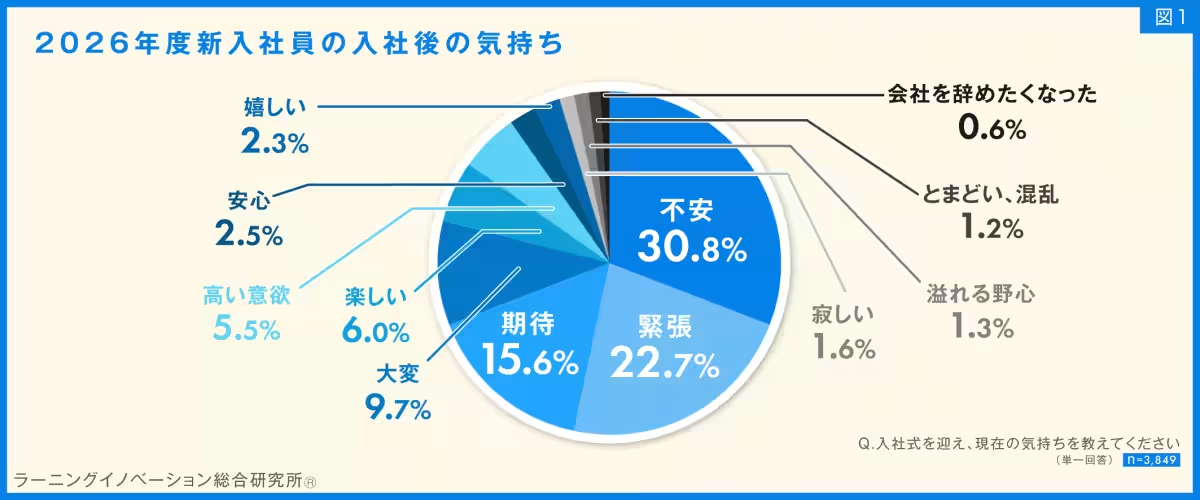
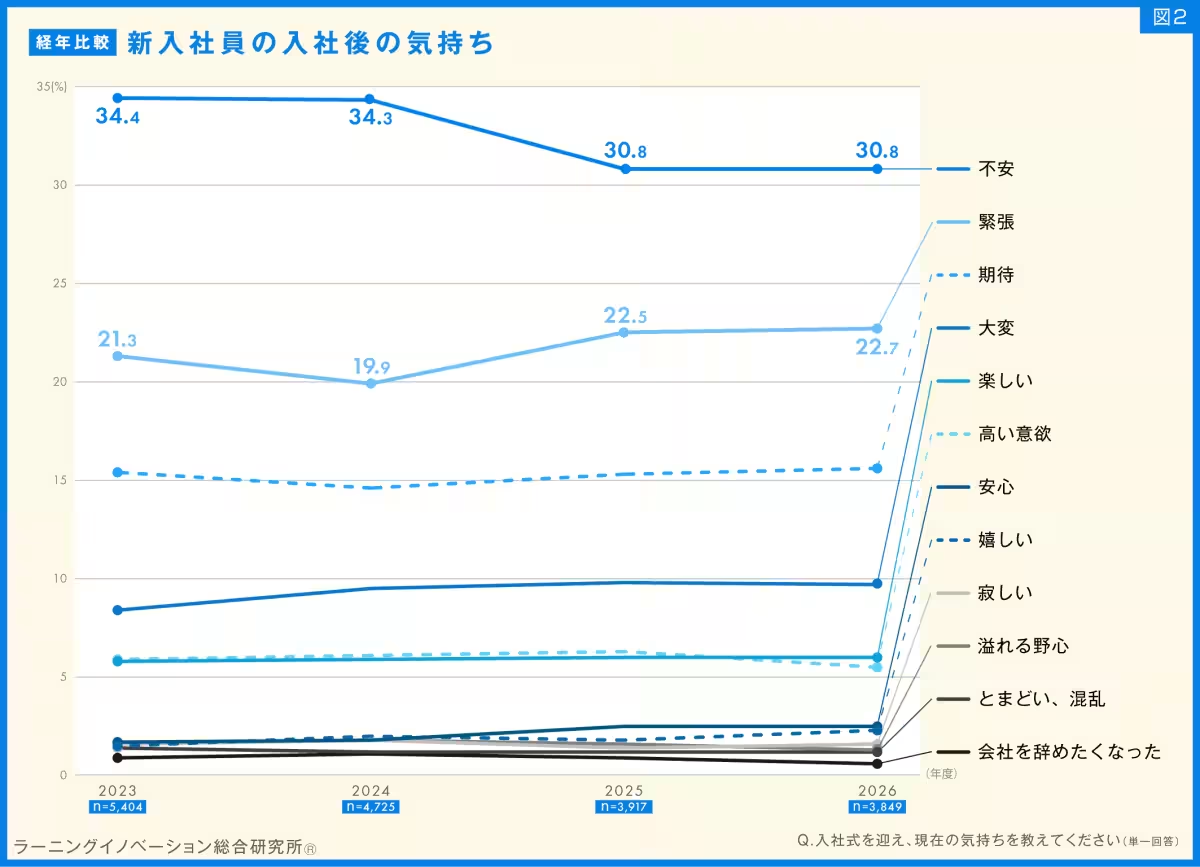
1. Post-Orientation Feelings: About 30% of new employees expressed feeling 'anxious' after their orientation ceremony, with 'nervousness' following closely at 22.7%. This marks the highest anxiety level observed in four years.
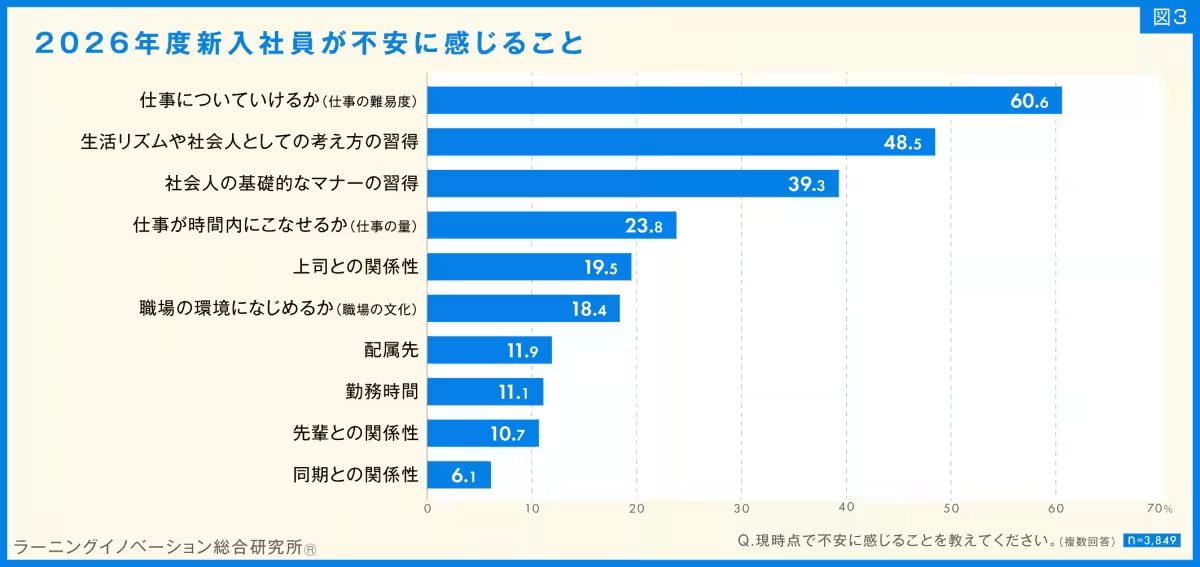
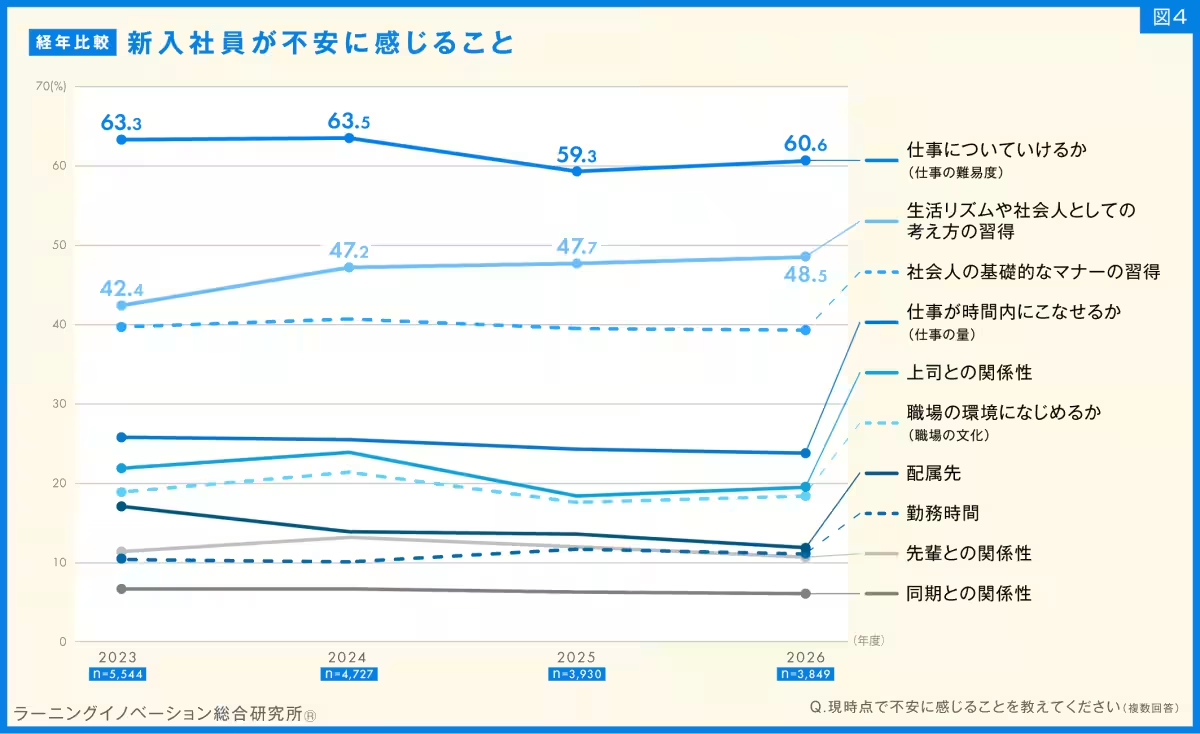
2. Concerns About Job Complexity: When asked about their biggest worries, over 60% of respondents cited anxiety about being able to keep up with the demands of their jobs, maintaining this as the top concern for four consecutive years.
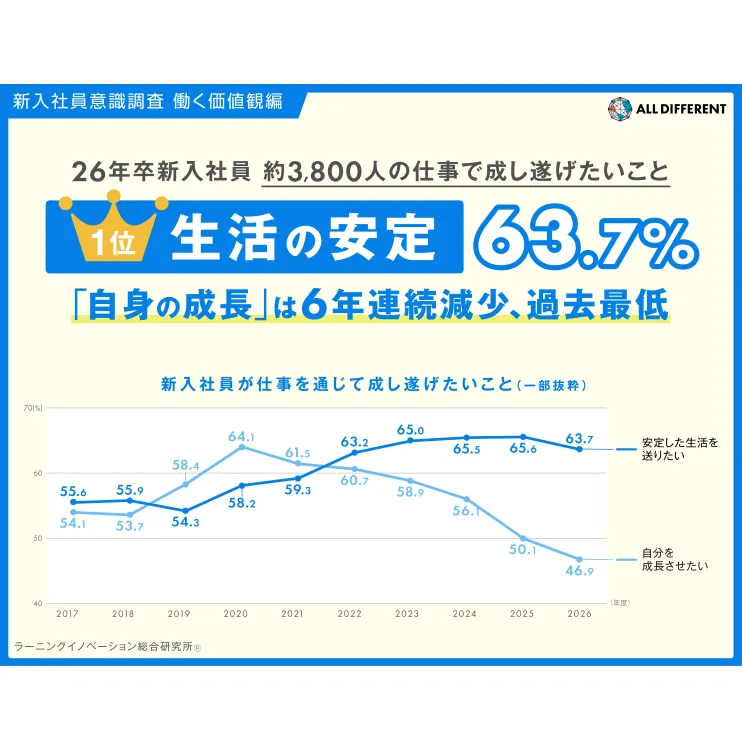
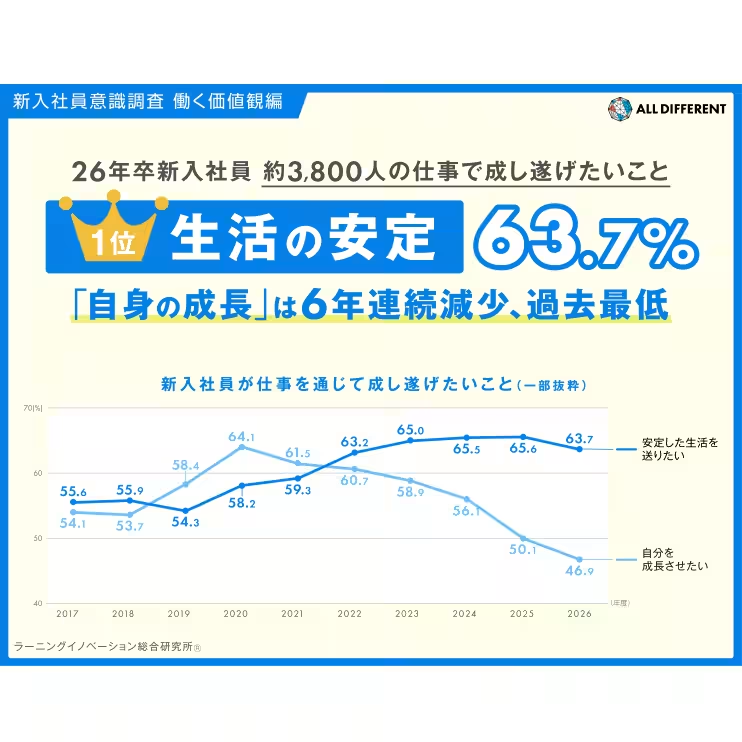
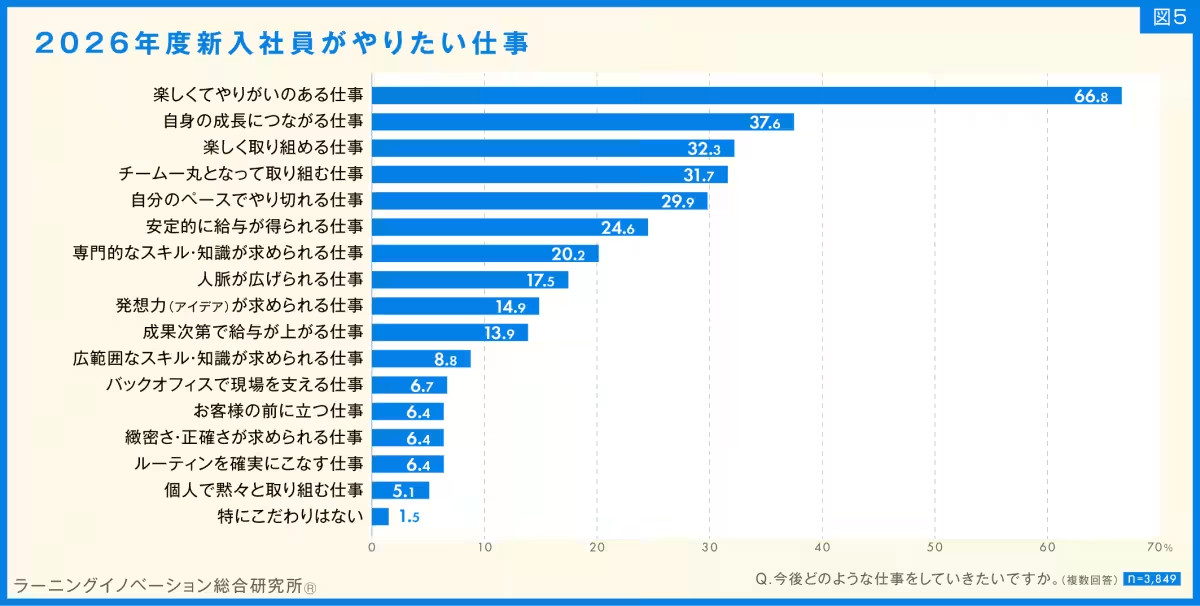
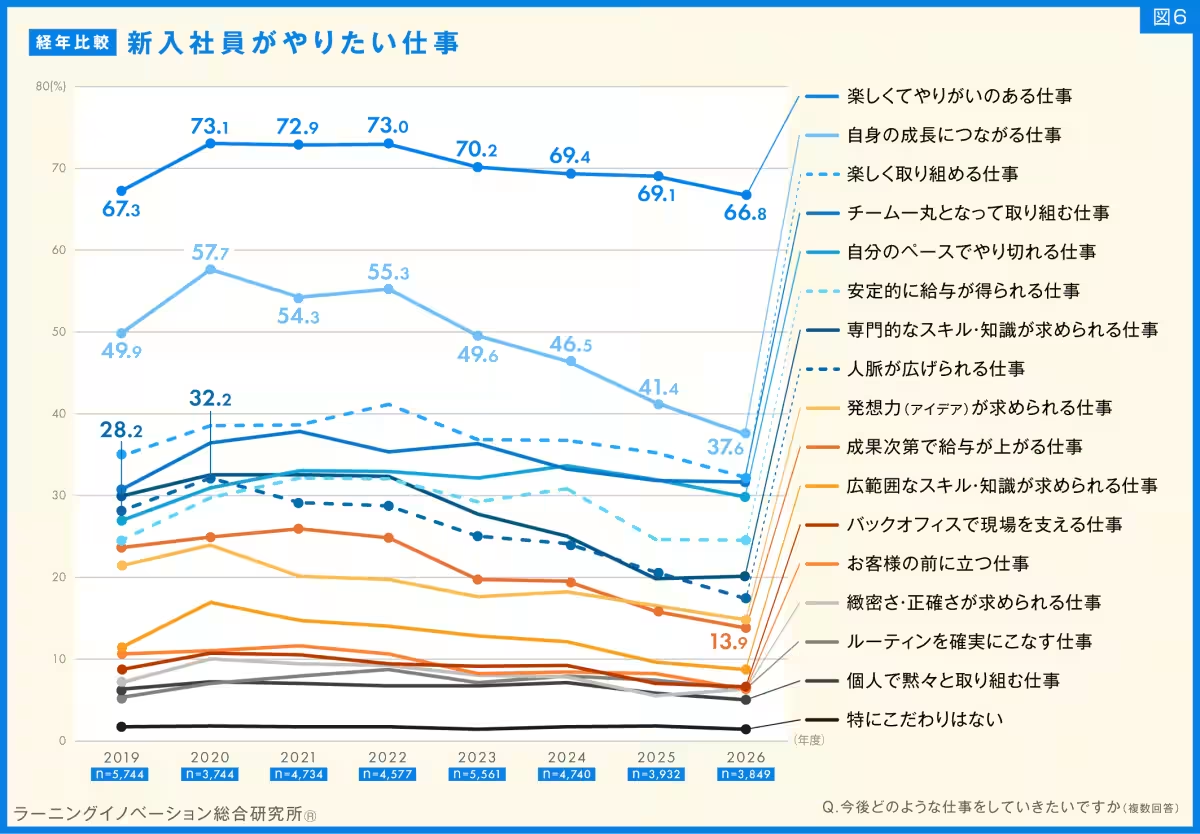
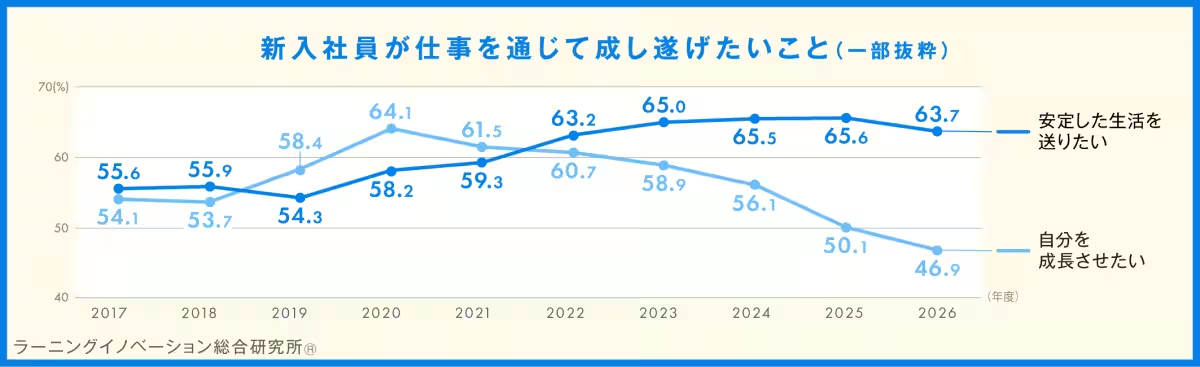
3. Desire for Enjoyable Work: A significant 66.8% indicated that they want to engage in 'fun and fulfilling work', while interest in personal growth has significantly declined by about 20 percentage points since 2020, hitting a new low.
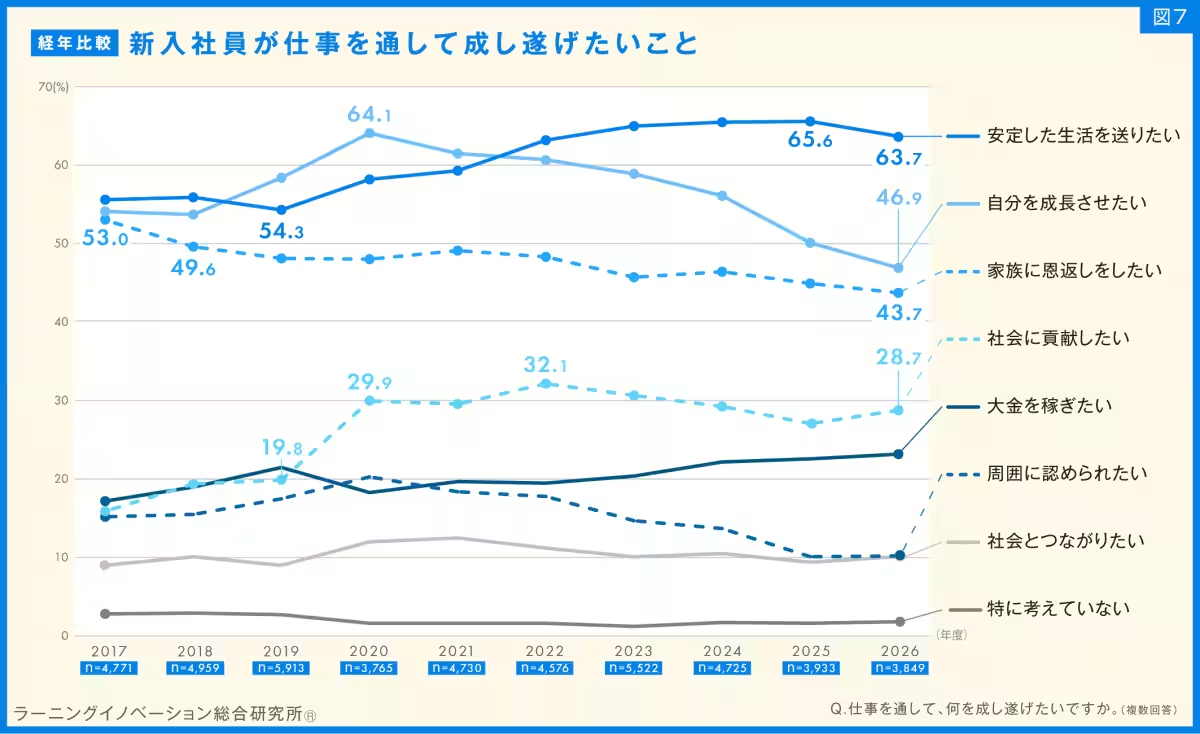
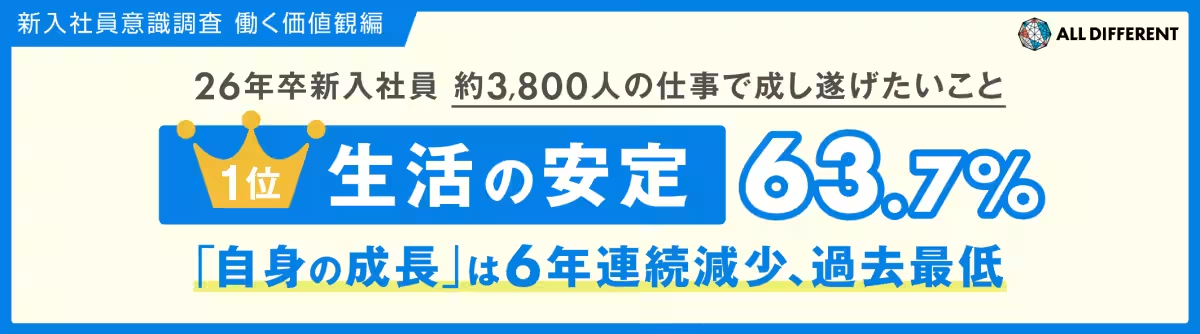
4. Focus on Life Stability: Most new graduates prioritize having a stable lifestyle (63.7%), a record increase from previous years. Conversely, the desire for personal growth has seen a considerable decline of 17.2 points since 2020.
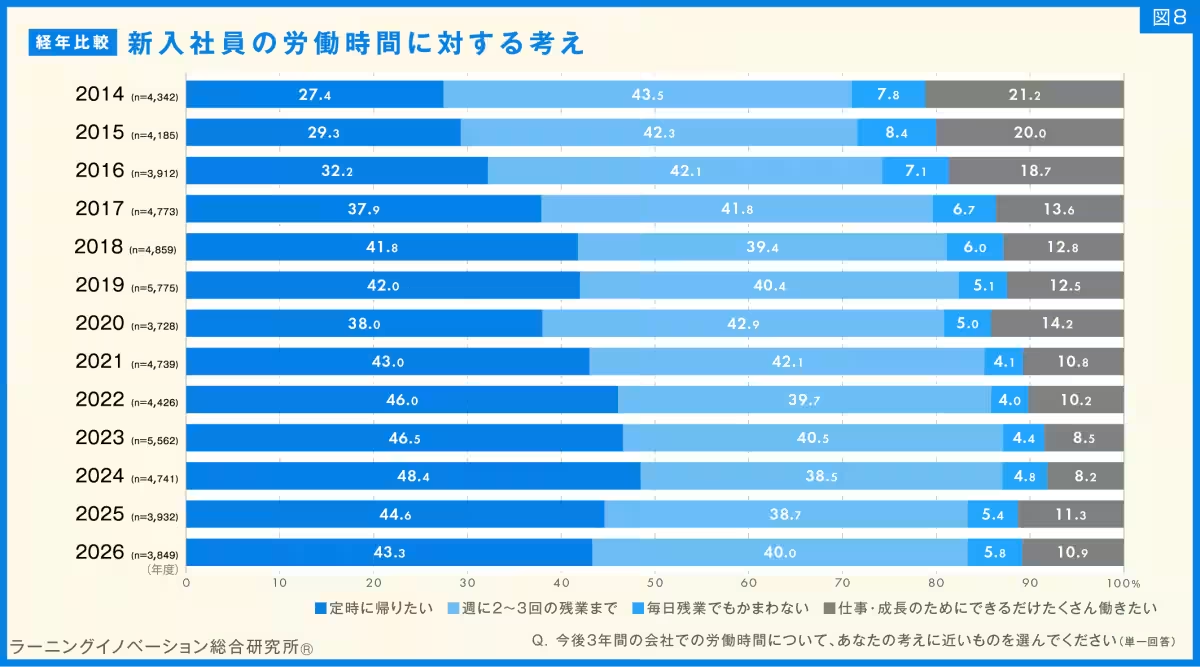
5. Work-Life Balance Preferences: 43.3% stated a preference for leaving work on time. However, this percentage has been decreasing since it reached 48.4% in the 2024 fiscal year.
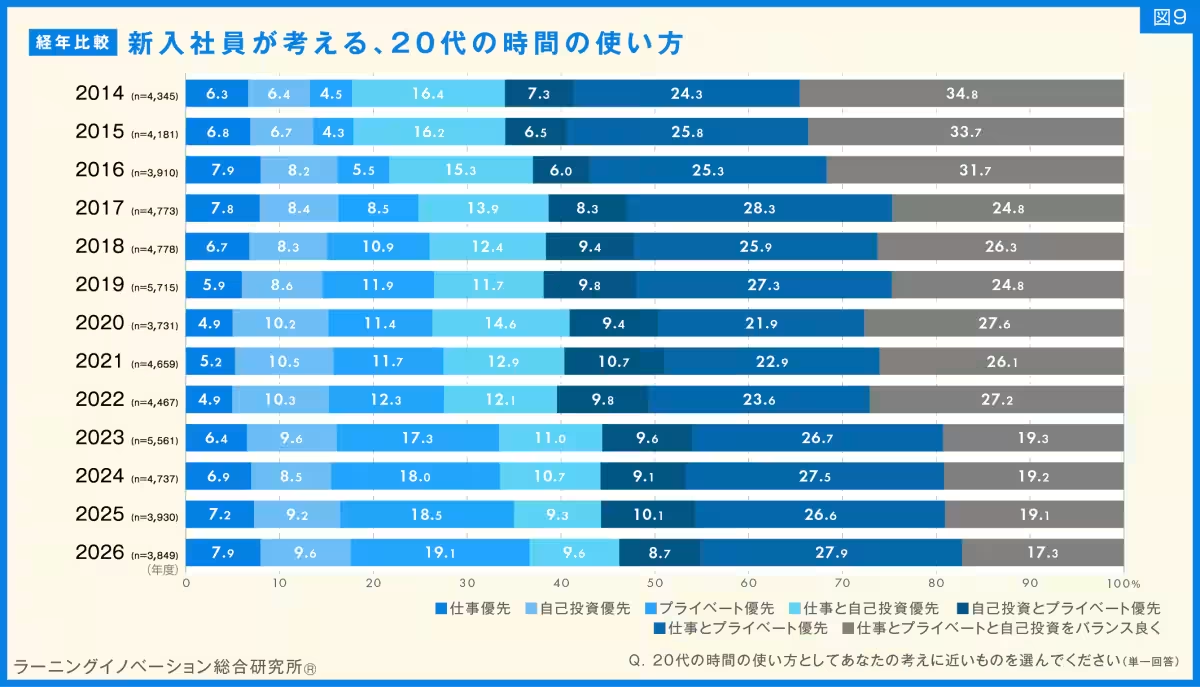
6. Prioritization of Personal Life: There is an increasing trend among those in their 20s to prioritize personal life, recording a peak of 19.1% who indicated this preference.
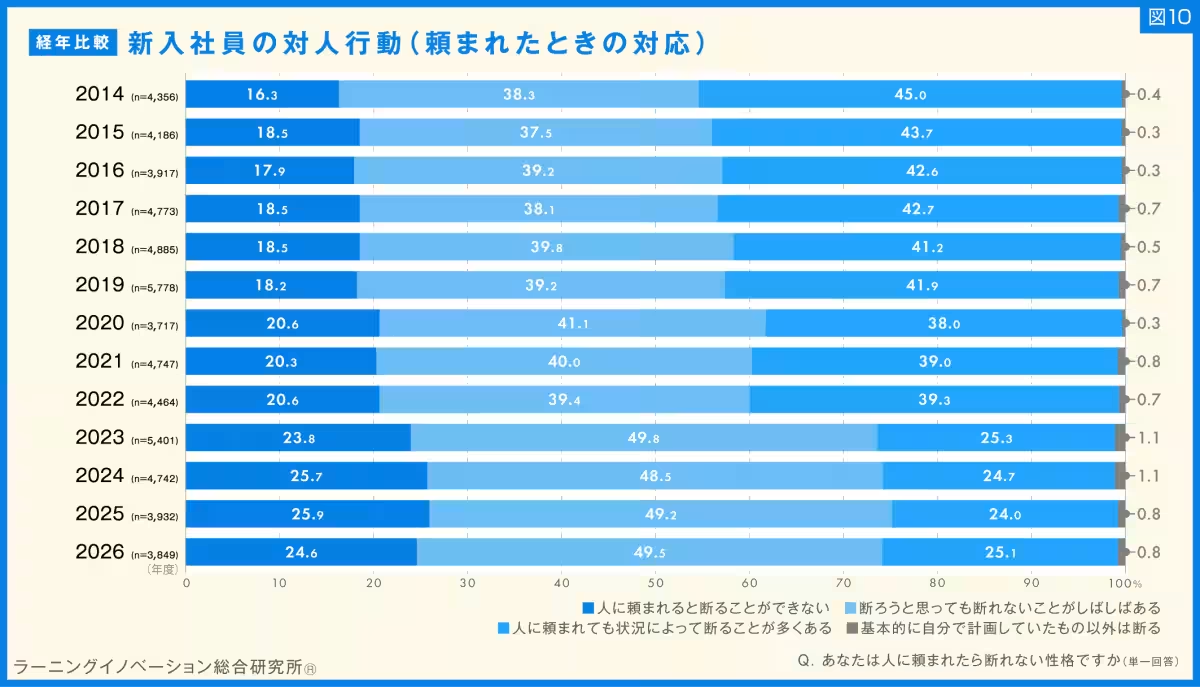
7. Struggles with Saying No: Around 70% admitted they find it challenging to decline requests from others, showing a persistence in this behavior since 2023.
Analyzing the Results
The data reveals that the 2026 cohort of new hires is stepping into their careers amid significant uncertainty and evolving value systems.
- - Navigating Uncertainty: The overarching theme of anxiety, centered on job complexity and the fear of not meeting expectations, demonstrates the pressure felt by these new employees as they transition from student life to professional roles.
- - Shifting Values: Interestingly, the desire for personal and professional growth appears to be diminishing, giving way to a preference for enjoyable, stable work conditions. This change illustrates a fundamental re-evaluation of priorities influenced by a tumultuous global landscape.
- - Workplace Dynamics: The strong inclination towards leaving work on time and personal life prioritization indicates a clear shift towards a more balanced approach to work, contrasting sharply with previous generations who often prioritized career advancement above all else.
Recommendations for Organizational Leaders
Given these insights, it is crucial for organizations to adapt to the evolving mindsets of new employees.
1. Visibility of Growth Opportunities: Companies should consider implementing clearer pathways for personal and professional development. By defining what skills and experiences are necessary for growth and communicating these effectively, organizations can help alleviate concerns about job complexity and align new hires’ goals with corporate objectives.
2. Quality of Managerial Support: Enhancing the quality of support and guidance offered by managers can foster a more engaging work environment. Providing clarity on objectives, expectations, and the overall purpose of work can empower new employees. Managers should convey high expectations coupled with constructive feedback to nurture confidence in new hires.
Conclusion
The evolving landscape of workplace values among new graduates presents both challenges and opportunities for organizations. By understanding and responding to their desires for stability, enjoyment, and a balanced life, companies can better equip themselves to recruit and develop a talented workforce that aligns with these new priorities. As shown in the survey findings, organizations must adapt to these shifts in perspective to cultivate a thriving culture that meets the needs of the new generation of employees.


Topics People & Culture)


【About Using Articles】
You can freely use the title and article content by linking to the page where the article is posted.
※ Images cannot be used.
【About Links】
Links are free to use.