



Huawei Unveils Fully Revamped Xinghe Intelligent Network Solutions for Europe
Huawei Unveils Fully Revamped Xinghe Intelligent Network Solutions for Europe
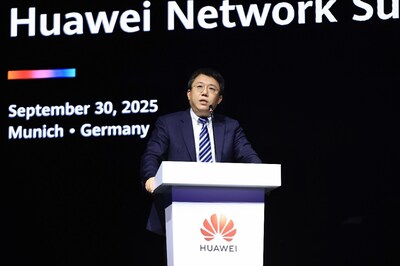
In an impressive display of innovation, Huawei recently held its Network Summit 2025 in Munich, where the tech giant unveiled a comprehensively upgraded suite of its Xinghe Intelligent Network solutions tailored for the European market. Attracting over 800 experts and partners from more than 30 countries—including notable participants from Germany, France, Italy, and Switzerland—the summit focused on intelligent networking trends and insights vital to Europe's digital transformation.
Pioneering Innovation for Intelligent Transformation
Jim Lu, Huawei's Senior Vice President and President of the European Region, emphasized the crucial role of Artificial Intelligence (AI) as it becomes more accessible and economically viable. He highlighted how the new Xinghe network ecosystem optimizes data workflows and enhances AI application experiences, thereby accelerating the intelligent transformation across various sectors. In his address, Lu reiterated Huawei's commitment to collaborating with customers and partners to underpin intelligence in a future increasingly driven by smart technologies.
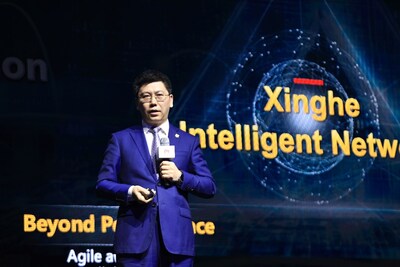
The '3-Beyond' Framework
Huawei's Xinghe Intelligent Network is built upon the foundational '3-Beyond' framework, introduced by Steven Zhao, Vice President of the Data Communication Product Line. This framework consists of:
1. Beyond Performance: Enhancing the limitations of network capabilities to provide exceptional service experiences.
2. Beyond Resilience: Achieving new levels of resilience to ensure maximum reliability and security.
3. Beyond Autonomy: Merging digital and physical realms to embrace autonomous networking on multiple levels.
Cutting-Edge Innovations for Campus and Data Centers
Huawei's updates include several groundbreaking technologies that cater to campus environments. One notable advancement is the introduction of the industry's first spycam-detecting access point (AP). This innovative device employs full-band scanning and intelligent algorithms to identify hidden cameras, thus safeguarding privacy at all times. Additionally, their Wi-Fi sensing technology utilizes proprietary algorithms to detect micro-movements, ensuring sensitive areas remain secure and preventing unauthorized entries.
In the realm of data center management, Huawei's latest model, Xinghe AI Fabric 2.0, aims to create ultra-resilient data networks that operate seamlessly. With the rapid escalation in transaction volumes—now reaching over 100,000 transactions per second—swift fault recovery mechanisms have become paramount. This new setup can simulate and configure thousands of network and security devices within five minutes, improving efficiency by a remarkable factor of 100. Moreover, the state-of-the-art Eagle-Eye Engine facilitates real-time detection of up to 200,000 data flows, identifying issues within seconds and rectifying them in mere minutes.
Advancements in Intelligent WAN and Network Management
For Internet Service Providers (ISPs), traditional methods have often struggled with identifying encrypted applications, hindering the development of value-added services. Huawei has developed an intelligent service awareness algorithm that increases the identification accuracy of encrypted applications to over 95%. In addition, the company has introduced intelligent jitter elimination technology, designed to maintain latency variation within 10 microseconds—20 times better than the current industry average—ideal for the energy sector transitioning to flexible networks.
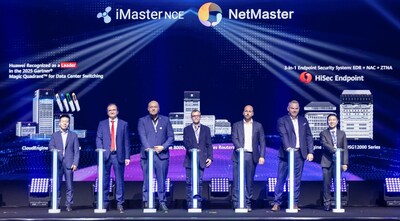
The launch of NetMaster was another highlight, positioning it as the industry's first intelligent network agent capable of automating processes across awareness, analysis, decision-making, and implementation. This allows for resolutions of approximately 80% of wireless issues in higher education and office environments, drastically cutting problem-solving time from hours to minutes.
Addressing Healthcare and SME Challenges
In the healthcare sector, challenges such as high packet loss during roaming for mobile patient devices are addressed through Huawei's Advanced Same Frequency Network (ASFN) technology, which facilitates zero roaming and uninterrupted service for medical devices. Similarly, in small and medium-sized enterprises (SMEs) facing budget constraints and limited IT resources, Huawei's eKit provides solutions like the AR180 wireless business router, which integrates essential functions such as routing, switching, and Wi-Fi 7, effectively reducing capital expenditures by 50%.
Conclusion
Huawei’s commitment to innovation is evident through the launch of the Wi-Fi 7 Advanced Technology White Paper, which outlines advancements in wireless networking, including integrated communication and security features. These new offerings not only enhance service delivery but also establish a strong basis for intelligent infrastructure across Europe. As the tech giant continues to collaborate with various stakeholders, its positioning of the Xinghe Intelligent Network as a cornerstone for a smarter tomorrow is poised to transform how industries operate in this digital era.
Topics Telecommunications)
【About Using Articles】
You can freely use the title and article content by linking to the page where the article is posted.
※ Images cannot be used.
【About Links】
Links are free to use.