



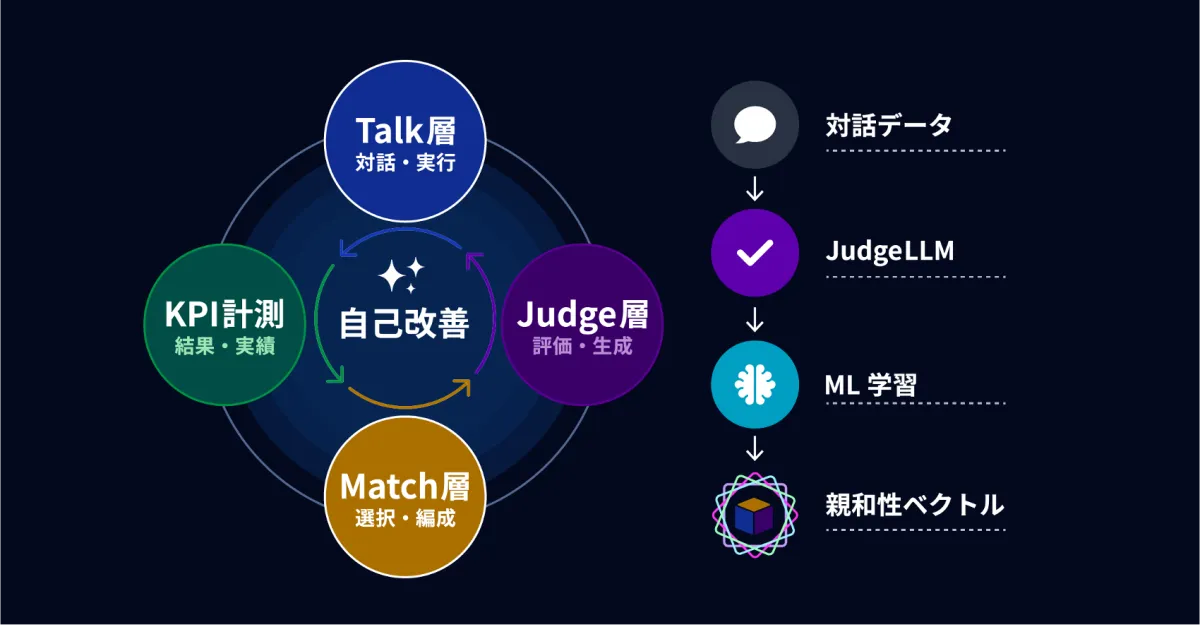
Innovative Collaboration: KOKUYO and TIGEREYE File Joint Patent for OFFICE AGENTIC AI
Transforming Workspaces with OFFICE AGENTIC AI
In an exciting move that could reshape the landscape of modern workspaces, KOKUYO Corporation and TIGEREYE have announced their joint patent application for a pioneering AI technology known as OFFICE AGENTIC AI. This innovative technology aims to enhance behavioral changes in office environments and boost intellectual productivity by facilitating collaboration between AI and humans.
The Vision Behind OFFICE AGENTIC AI
The core concept of OFFICE AGENTIC AI revolves around an orchestration method, program, and system driven by intelligent agents. Through this technology, AI will learn from individual behavior data, evolving the relationship between people and their working environments by enabling dialogue, assessment, and optimization.
Building on TIGEREYE's state-of-the-art multimodal AI framework, this collaborative effort merges with KOKUYO's philosophy of an Autonomous Collaborative Society. Together, they strive to create an office environment that is not just a physical space but an intelligent ecosystem that understands and facilitates the work of its inhabitants.
Key Features of the Technology
At the heart of OFFICE AGENTIC AI is a structured communication protocol called Model Context Protocol (MCP), designed for managing interactions between AI and humans. The protocol vectorizes conversation content, intentions, and contextual information, allowing AI to autonomously decide the best ways, partners, and goals for collaboration.
Some standout features include:
- - Multi-Dimensional Interaction: Utilizing MCP for exchanging rich metadata.
- - Scoring Vector: A multidimensional evaluation mechanism for AI responses.
- - Affinity Vectors: Enabling optimal matching between agents and human resources.
- - Graph Database Learning: Facilitating dynamic learning from history, outcomes, and behaviors.
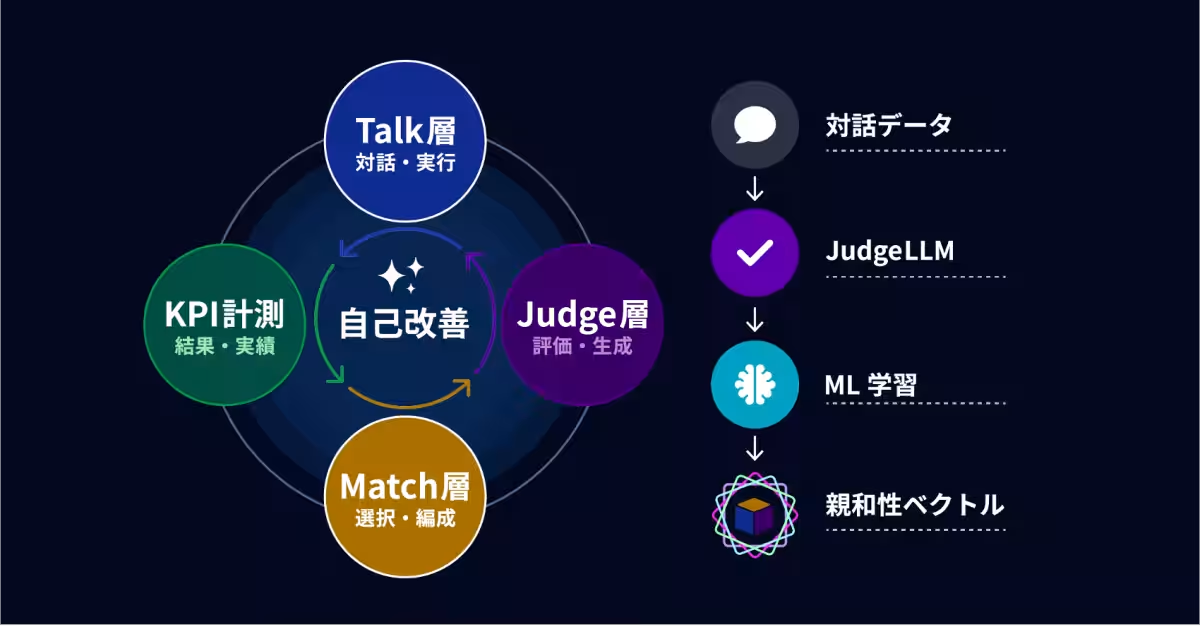
- - Three-Layer Structure: Comprising Talk, Judge, and Match layers for autonomous control and learning.
The Three-Layered Architecture
The technology utilizes a three-layered structure:
- - Talk Layer: Facilitates dialogue generation between users and AI.
- - Judge Layer: Assesses and scores the dialogue content.
- - Match Layer: Identifies the most suitable agents or human talents for the task at hand.
This comprehensive architecture allows AI to optimize not just individual behavior but also to make real-time adjustments to workplace arrangements. It can analyze anonymized employee behavior patterns, meeting data, and communication history to suggest optimal seating arrangements, meeting times, and team compositions.
Forward-Looking Statements
Both companies envision transforming traditional workspaces into dynamic entities that learn and adapt. As KOKUYO's CEO, Hideto Kuroda, stated, “We aim to evolve the working space from a mere location into an agent that facilitates behavioral change.” Meanwhile, TIGEREYE’s CEO, Manabu Uemura, emphasized the need for Agentic AI as a next-generation intellectual foundation, advocating for seamless integration between spatial design and AI control to create an 'evolving intelligent ecosystem'.
Future Developments
KOKUYO and TIGEREYE plan to implement OFFICE AGENTIC AI in practical applications as part of their OFFICE OS and OFFICE AGENT initiatives. This experimentation will cover areas such as meeting room bookings, attendance, information sharing, and well-being assessments. Ultimately, the goal is to develop a platform that understands individual employee behaviors, emotions, and motivations, thereby evolving the very nature of work itself.
Getting in Touch
For further inquiries about this groundbreaking collaboration, please contact TIGEREYE:
- - Website
- - Phone: 03-6280-6762
- - Email: [email protected]
With OFFICE AGENTIC AI, the future of work is not only bright but also profoundly collaborative and intelligent.
Topics Business Technology)
【About Using Articles】
You can freely use the title and article content by linking to the page where the article is posted.
※ Images cannot be used.
【About Links】
Links are free to use.