




Transforming Early Childhood Education: A New Era for Children, Parents, and Caregivers
Transforming Early Childhood Education
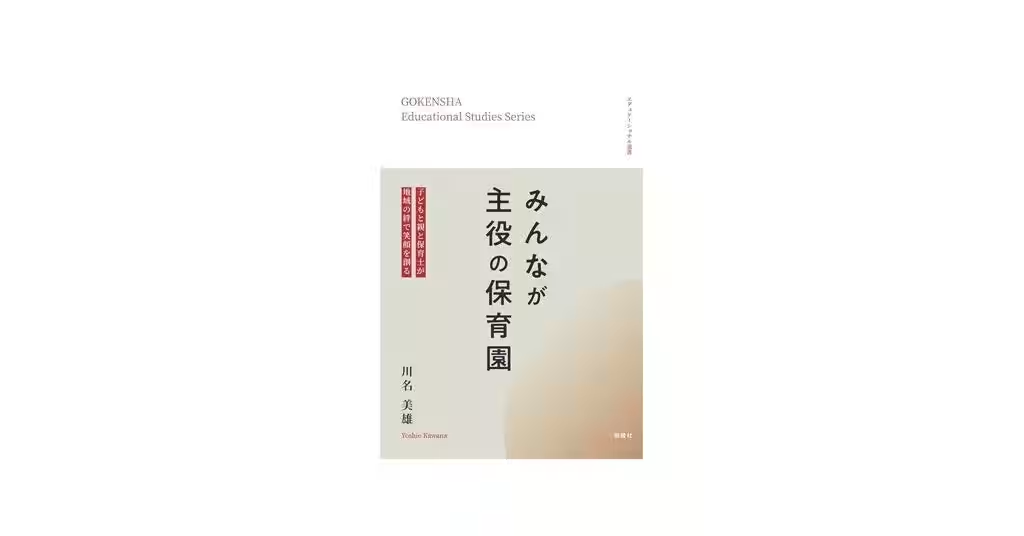
In a groundbreaking publication, Yoshio Kawana, the chairman of the Kizuna Foundation, is set to revolutionize early childhood education with his new book, "A Nursery Where Everyone is the Leading Actor: Creating Smiles Through Community Bonds". Slated for release on September 10, 2026, by Kouken Publishing, this insightful text draws from the experiences of five nursery schools and two children's developmental support facilities under Kawana's guidance. The book is an intricate guidebook that illustrates how to reform education from the ground up, prioritizing the needs and joys of children.
Aiming for Meaningful Change
At the heart of Kawana's work is a profound realization: simply claiming to act in the best interest of children does not guarantee their happiness or well-being. Inspired by his experiences, Kawana provides a fresh perspective on how childcare and education should function. The educational system has often been critiqued for its top-down approach, which can overlook the unique needs of each child and demoralize caregivers. In his book, Kawana offers a roadmap for a more equitable and engaging childcare environment.
Key Transformations in the Book
1. Focusing on Individual Choices: The book stresses the importance of acknowledging that not all children thrive under a uniform standard. It advocates shifting from a curriculum dictated by adults to one that affirms each child’s ability to think independently and make choices.
2. Empowering Caregivers: The traditional expectation of self-sacrifice among caregivers is challenged. Instead, the book outlines strategies for cultivating a supportive workplace culture that encourages teamwork, promotes individual strengths, and prioritizes behavioral health for both staff and children.
3. Reframing Parent Relationships: Instead of seeing parents purely as customers, the book encourages viewing them as collaborative partners in their children's growth, fostering a spirit of teamwork among parents, educators, and the community.
A Resource for All Stakeholders
With a thorough examination of current practices, the book aims to resonate with various stakeholders, including educators, facility directors, organizational leaders, parents, and community supporters. Kawana's vision emphasizes collaboration, turning the educational environment into a shared space where everyone plays a vital role. This is not just about improving the educational approach; it’s about creating a robust network of support in the community that recognizes everyone's contribution.
One of the unique features of the book is its focus on practical implementation, drawn from years of experience. With over 2,000 participants in their workshops annually, the Kizuna Foundation offers credibility for the proposed systems. Readers will find specific case studies illustrating how to create environments that respect and enhance children's choices and individuality.
Practical Strategies Implemented
- - Enhanced Learning Materials: The book reveals innovative educational materials that are adaptable and don’t limit children's creativity. There is a shift from conventional evaluation methods to ones that prioritize children's emotional responses and development.
- - Creating Safe Workplaces: Caregivers are liberated from mundane tasks, thanks to digital tools and resources that allow them to focus on engagement with children. The book suggests systemic changes that support caregiver well-being, such as the incorporation of technology to streamline operations.
- - Building Community Bonds: Engaging families, local volunteers, and seniors to promote interactions creates a nurturing environment for children, allowing them to learn the values of reciprocity and community support.
The Ultimate Vision
Looking ahead, Kawana imagines a future where childcare centers serve as the nucleus of a supportive network encompassing educational, medical, and community services, creating what he describes as a







Topics Other)









【About Using Articles】
You can freely use the title and article content by linking to the page where the article is posted.
※ Images cannot be used.
【About Links】
Links are free to use.