



Hitachi, Mitsui O.S.K. Lines, and JAL Utilize New CO2 Capture Tech in Japan
A Groundbreaking CO2 Capture Initiative in Japan
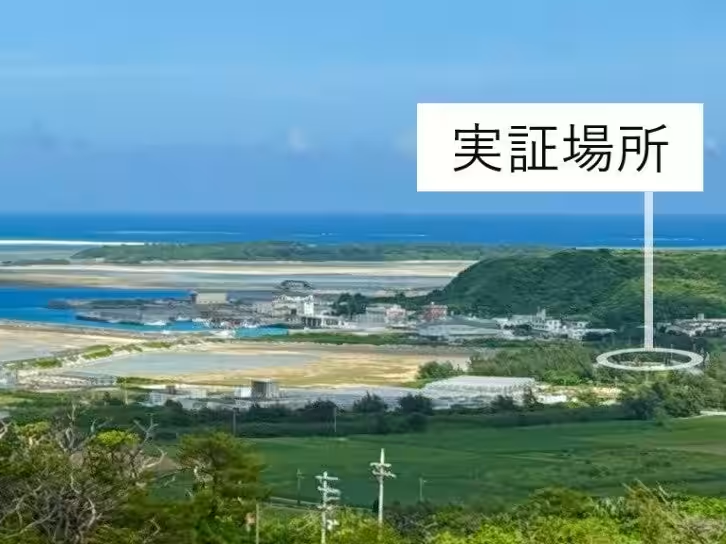
In an exciting development for environmental sustainability, Hitachi, Mitsui O.S.K. Lines, and Japan Airlines (JAL) have signed a memorandum of understanding (MOU) to conduct Japan's first demonstration project utilizing Direct Ocean Capture (DOC) technology. This innovative method aims to separate and recover CO2 directly from seawater, and the project will take place on Kume Island, Okinawa.
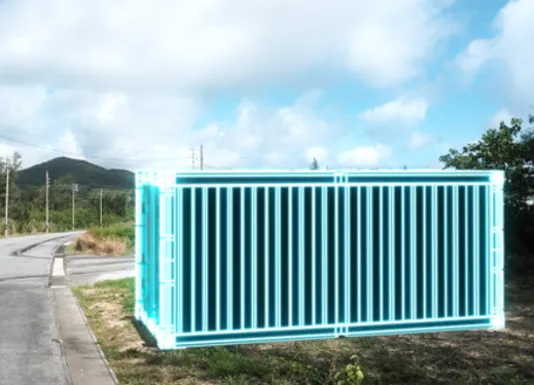
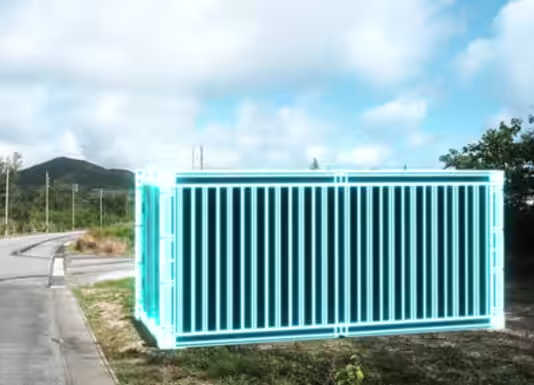
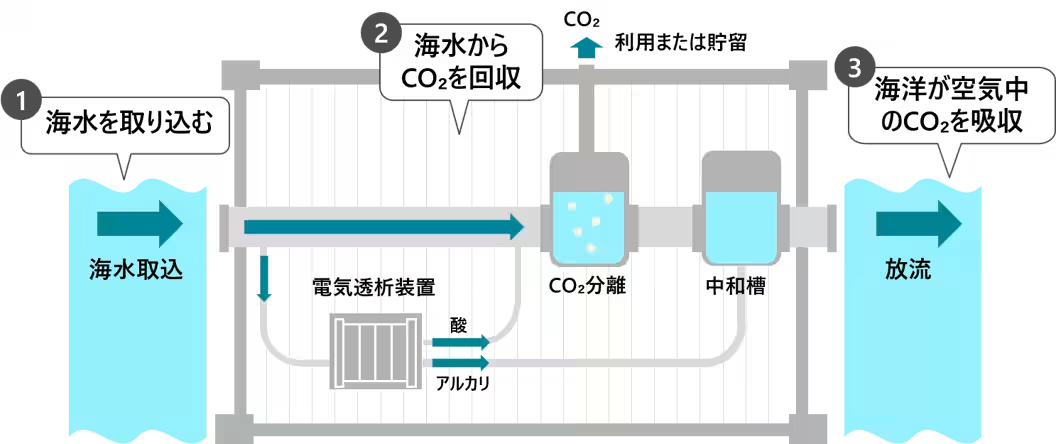
The purpose of this demonstration is to assess the applicability of the DOC technology in nearby ocean waters and gather crucial baseline data regarding operational challenges and environmental impacts for future coastal implementations. Utilizing a container-type experimental facility installed on land, seawater will be drawn in to separate CO2, showcasing a practical application of this advanced technology.
Kume Island has become a hub for marine research and innovation, already hosting experiments in marine temperature differential power generation and other cutting-edge projects. The island's unique environment makes it an ideal location for launching Japan's first DOC demonstration, gathering a wealth of knowledge and talent in marine studies.
Expanding the Blue Economy
The three companies aim to explore ways to utilize the captured CO2 locally while investigating educational and promotional activities centered around DOC technology. This initiative contributes to generating new value from the ocean, reinforcing efforts to establish a blue economy that promotes sustainable marine resource usage while fostering economic growth and enhancing ecosystem health.
Background of the Demonstration
As sectors like shipping and aviation find it challenging to cut down CO2 emissions using solely electric energy, effective measures to counterbalance residual emissions are becoming critical. The anticipated expansion in demand for such technology highlights the urgency for establishing effective direct CO2 removal methods. Developing a domestic framework is crucial for minimizing future costs associated with carbon credits, prompting the need for these companies to work in synergy.
Their investments through subsidiaries in U.S.-based Captura Corp., a DOC technology developer, pave the way for sharing expertise and advancing domestic demonstrations in Japan. This project is positioned as the first step towards establishing a sustainable carbon economy, with plans to use the recovered CO2 in future synthetic fuels like E-SAF (Sustainable Aviation Fuel).
Understanding DOC Technology
DOC represents a cutting-edge method to directly and efficiently separate CO2 from seawater. The seawater holds a significantly higher concentration of CO2 than the atmosphere—approximately 100 to 150 times greater—allowing for effective extraction. This process creates a balance between the ocean and the atmosphere, facilitating CO2 absorption to reduce overall atmospheric levels through a cyclical effect.
Roles of the Companies
Hitachi spearheads the initiative under its sustainability strategy, "Inspire 2027," focusing on harnessing precise measurement technology for monitoring the project. By analyzing data related to the operational status of the equipment, CO2 levels, pH, and other environmental variables, they aim to optimize energy-efficient operations while contributing to a reliable carbon credit verification process.
Mitsui O.S.K. Lines leverages its established partnerships in Kume Island to ensure localized support and cooperation, further contributing to potential new business avenues stemming from the DOC technology.
Meanwhile, JAL seeks to enhance awareness and understanding of DOC technology within the aviation sector, participating closely with local carriers to evaluate future opportunities for using captured CO2 in E-SAF production.
Conclusion
This collaborative endeavor holds promise in addressing the challenges of carbon emissions in transportation sectors, setting a benchmark for CO2 reduction initiatives in Japan. As the three companies embark on this unprecedented project, their combined expertise heralds a new era for sustainable practices in maritime and aviation industries, paving the way for broader global efforts against climate change.
Topics Environment)
【About Using Articles】
You can freely use the title and article content by linking to the page where the article is posted.
※ Images cannot be used.
【About Links】
Links are free to use.