



The Rise of Hybrid Learning: AI and Human Interaction in English Conversations
Exploring the New Frontier of AI and Human Language Learning
The Shift Toward Hybrid Learning
As of April 2025, a fascinating trend has emerged from the 27th Bizmates survey, which explored the real-world effectiveness of AI-based English conversation services versus traditional human interactions. Conducted by Bizmates, Inc. in Tokyo, the survey assessed inputs from 441 business professionals who experienced both learning methods. The findings emphasize the unique benefits and limitations each approach has in contributing to English language mastery.
Key Findings
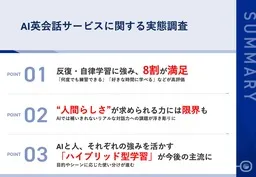
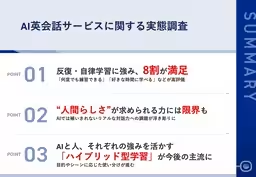
The survey revealed that while AI conversation tools excel in promoting repetitive practice and self-directed learning, the indispensable elements of improvisation and contextual understanding still rely heavily on human interactions. This duality presents a clear direction towards a hybrid model—integrating AI with human conversation practices.
Survey Overview
The survey was conducted online from March 28 to March 29, 2025, utilizing the IDEATECH research PR platform, ‘Risapee®︎’. The demographic was diverse, including professionals ranging from beginner to intermediate and advanced English speakers, which is crucial for understanding varying experiences with language learning.
English Proficiency Levels
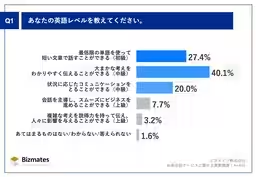
When participants were asked about their English proficiency, over 60% identified as intermediate, with 10.9% reporting advanced skills. This indicates a significant number of learners benefiting from both AI assistance and human guidance, reinforcing their intermediate to advanced capabilities in professional environments.
Motivations for Learning English
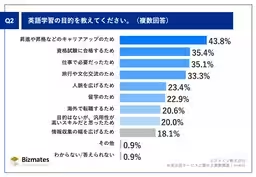
Among the objectives of learning English, career advancement topped the list at 43.8%, followed closely by preparing for certification exams and addressing job-related needs. These responses highlight that business-related motivations largely drive English language learning, although personal and cultural aspirations remain significant as well.
Usage Patterns
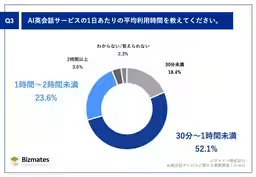
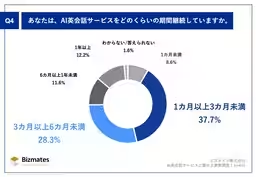
Interestingly, around 80% of respondents used AI English services for over 30 minutes daily, with many continuing this engagement for more than a month. This sustained usage shows a clear acceptance of AI tools as long-term resources for language acquisition. Busy professionals benefit from the flexibility and convenience that AI applications offer, often fitting into their hectic schedules.
Importance of Learning Experience
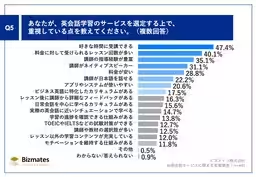
Participants indicated that the most important factors in selecting English learning services were convenience and quality. Factors such as the ability to learn at preferred times and affordability dominated their decision-making processes, underscoring the need for services that cater to busy lifestyles. Meanwhile, high-quality teaching, including experienced instructors and native speakers, remains essential for many learners.
Satisfaction with AI Tools
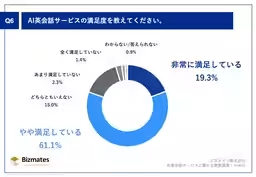
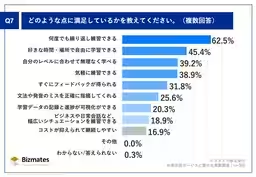
The satisfaction levels for AI-based English learning services were surprisingly high. More than 80% of participants rated their experience positively, indicating that AI's unique advantages—like flexibility and the opportunity for repetitive practice—are valued in professional contexts.
Recognizing Limitations
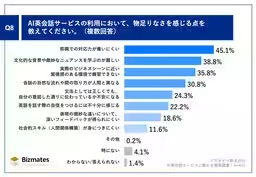
Despite the positive feedback, many users pointed out the limitations of AI tools, particularly in developing skills for real-world scenarios. Respondents noted difficulties in improvisation and understanding cultural nuances—areas where human interactions thrive. The call for the human touch in learning, especially when it comes to more complex communicative tasks, was quite evident.
Preference for Human Interaction
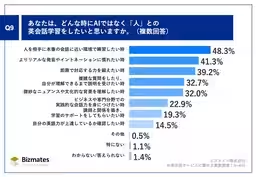
When considering situations needing genuine interaction—like practicing in a realistic dialogue, obtaining nuanced feedback, or addressing complex questions—over 40% of users preferred engaging with actual people over AI. Even in the convenience-centric climate of today's business world, the need for human interaction remains a formidable factor in language learning.
Emotional and Nuanced Conversations
Participants expressed a desire to engage in emotionally rich discussions or learn about culturally specific expressions—attributes that AI systems are less equipped to provide. Emotional intelligence plays a crucial role in successful communication, illuminating the value of human exchanges in language fluency.
Conclusion
In summary, the findings from the 27th Bizmates survey bring to light the strengths and weaknesses of both AI-driven and human-centric English learning methods. As professionals aim for career growth while enhancing their linguistic capabilities, a balanced approach incorporating both AI and human interactions appears to be the most effective. Hybrid learning might soon become the accepted standard, blending the best of both worlds to cater to the diverse needs of English learners in a globalized work environment.
Topics Consumer Technology)
【About Using Articles】
You can freely use the title and article content by linking to the page where the article is posted.
※ Images cannot be used.
【About Links】
Links are free to use.